



Intramedullary Nail OEM
The Intramedullary Nail OEM Manufacturer
| 24Yrs Orthopedic Implant Factory
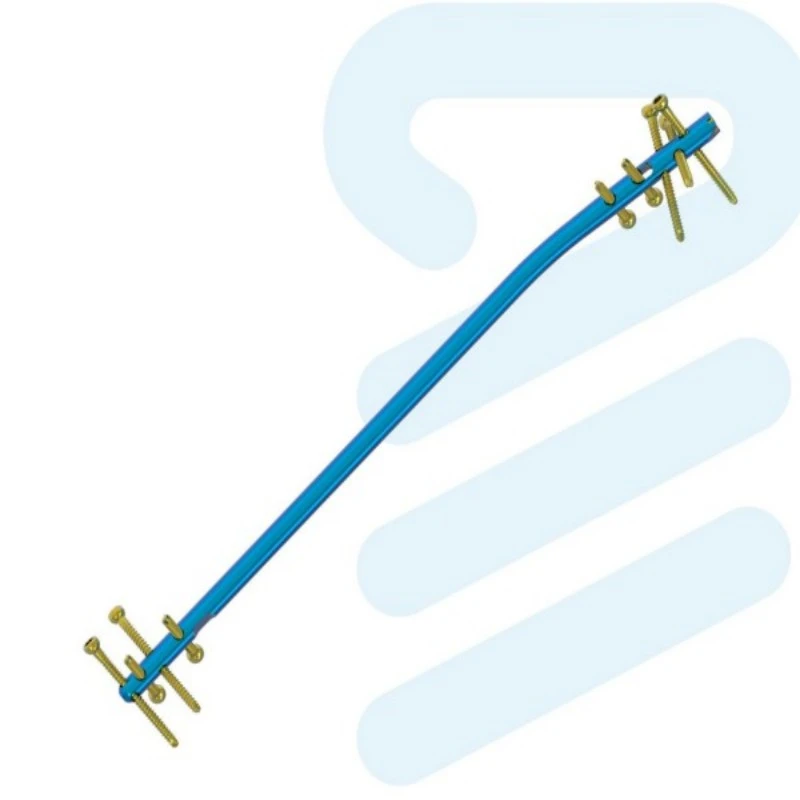
As a professional intramedullary nail OEM/ODM manufacturer with 24 years of experience in orthopedic trauma implants, we specialize in the custom production of titanium and stainless steel intramedullary nails for trauma orthopedic surgery. Our intramedullary nails cover a full range of specifications for upper/lower limb trauma fixation, including femoral intramedullary nails, tibial intramedullary nails, humeral intramedullary nails, and pediatric intramedullary nails, fully meeting the personalized OEM/ODM needs of global orthopedic brands, hospitals and medical device distributors.


Why choose us
OEM/ODM
We Offer complete solutions and scalable services from concept to commercialization, eg: concept development, product design, contract engineering, prototyping, testing, and contract manufacturing for medical devices etc like OEM/ODM mode.
Production Market
With ISO/CE certified quality, the company's sales network is throughout the country and has exported to different countries and regions in Asia, South America, Middle East, north America.
Rich Experience
Who offers concept development, product design, contract engineering, prototyping, testing, and contract manufacturing for medical devices with rich experience.
Production Equipment
60 CNC turning centres, 30 CNC milling centres as well as laser systems for marking and welding of assembly groups and special machines.

Minimally Invasive
Unlike external fixation or plating, IM nails require smaller incisions, leading to faster recovery and reduced infection risk.
Preserves Soft Tissue
Since the nail is inserted within the bone, the surrounding soft tissues and blood supply remain relatively undisturbed.

Provides Immediate Stability
The nail offers strong internal support, allowing patients to start moving the limb earlier.

Prevents Rotational Deformities
Proper insertion ensures correct alignment and reduces the risk of bones rotating out of place.
Different Types of Intramedullary Nails
Reamed nails
These require reaming the medullary canal to a specific diameter to accommodate the nail. This technique offers increased stability but may disrupt blood flow to the bone.
Unreamed nails
These nails are inserted without reaming. They are typically smaller in diameter and more flexible. Thus, this makes them ideal for minimally invasive procedures and certain fracture types.
Proximal Femoral Nails
Designed for fractures around the hip joint (intertrochanteric fractures). These nails often have a curved design to navigate the complex anatomy of the hip.
Femoral Shaft Nails
Used for fractures in the main shaft of the femur. They come in various lengths and diameters depending on the specific fracture location and bone size.
Distal Femoral Nails
These nails are suitable for fractures near the knee joint (supracondylar fractures). These nails often have additional features for stabilizing the joint.
Tibial Shaft Nails
Similar to femoral shaft nails, these are used for fractures in the main shaft of the tibia. They come in both reamed and unreamed varieties and may have features for targeting specific fracture patterns.
Intramedullary Interlocking Nails (Interlocking Nails)
These advanced nails allow for the insertion of screws through the nail body while providing additional stability for complex fractures.
Humeral IM nails are for fractures in the shaft of the humerus. These nails are typically shorter compared to femoral or tibial nails due to the anatomy of the upper arm.
Pediatric Intramedullary Nail OEM - For pediatric trauma fixation | Small size | Custom specs
Pediatric Intramedullary Nail is a specialized orthopedic implant designed exclusively for children and adolescents, tailored to the unique physiological characteristics of pediatric skeletons—including immature bone development, rapid growth potential and smaller anatomical structures.
OEM/ODM service process
Requirement Submission - Send your technical drawings/specs/brand demands via email/online chat
Free Quotation - Professional sales team provides detailed quote within 24 working hours
Design Confirmation - Engineering team optimizes design and confirms all details with you
Rapid Prototyping - 15-day sample production and global delivery for quality inspection
Mass Production - Start bulk production after sample confirmation | Strict multi-step QC
Global Shipping - Door-to-door delivery via DHL/FEDEX/sea/air freight | After-sales support
Materials of Intramedullary Nail
Stainless Steel
Strong and durable, ideal for high-load fractures.
Titanium & Titanium Alloys
Lightweight, biocompatible, and corrosion-resistant.
Cobalt-Chromium Alloys
Excellent for high-stress applications.
Composite Materials
Combine different materials for enhanced strength and flexibility.

Points to remember after undergoing Intramedullary nail procedure
First and foremost, a patient undergoing this surgery might feel his or her legs numb for 6 to 12 hours after the surgery. This happens when the patient is given a spinal injection. Also, after the surgery, the patient might experience slight numbness and pain for a few days. In addition to this, the leg might swell up. This symptom is also short term. Sometimes, in such cases, medications are also given to relieve the pain. So, one can see the usefulness of orthopedic bone screws.
Secondly, after the surgery, the patient is needed to walk. This helps by putting weight on the bone and by preventing the formation of blood clots. The process of putting pressure on the bone is called weight-bearing, and it essential to strengthen the bone. For the patient to walk without any difficulty, they are provided with crutches or any other walking device.
Also, another essential recovery step is deep breathing exercise. This helps in clearing the airway and helps in decreasing the chances of any lung infection.
Lastly, consulting a therapist is another crucial factor as it fastens the healing process by strengthening the muscles and making the joints flexible.
Packaging & Delivery
|
Packaging |
Inner: Non-sterile plastic bags. Small packing PE/PET, Big packing PVC. External: Standard carton. |
|
Lead Time |
7-14 days |
|
Delivery |
≤30kg, Door to door (DHL/TNT/UPS/FEDEX/EMS, etc.) >30 kg, Airport to Airport. By air or by sea. |
Our factory
FUXIANG Medical specializes in manufacturing medical implants, orthopedic surgical instruments, and high-precision CNC machined components—including turned/milled parts, wire-cutting components, custom 3D free-form contour parts, and ready-to-install assembly groups—for global medical and multi-industrial applications.

FAQ