

Hey there, folks! As an intramedullary nail supplier, I've been getting a lot of questions lately about whether these nifty devices can be used in patients with autoimmune diseases. So, I thought I'd dive into this topic and share some insights with you all.
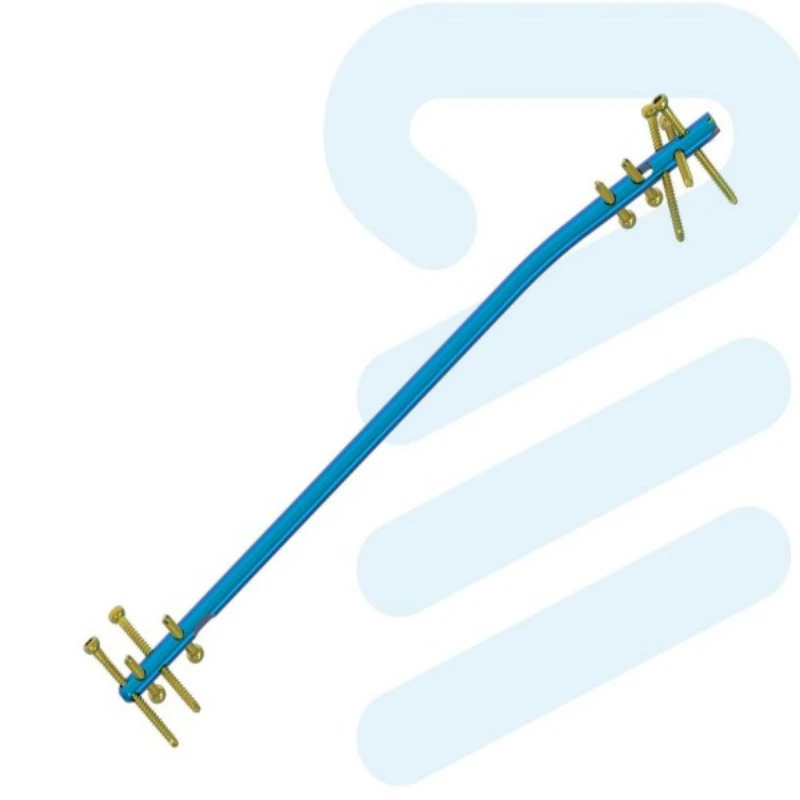
First off, let's quickly go over what intramedullary nails are. They're essentially long, thin rods that are inserted into the medullary cavity of a bone - that's the hollow part in the middle. They're used to stabilize fractures, like when someone breaks their femur, tibia, or has an intertrochanteric fracture. We've got different types in our catalog, like the Titanium Femoral Reconstruction Interlocking Nail, the Intramedullary Interlocking Nail Tibia, and the Intramedullary Nail Intertrochanteric Fracture. Each one is designed to fit specific types of fractures and bones.
Now, let's talk about autoimmune diseases. These are conditions where the body's immune system goes haywire and starts attacking its own healthy tissues. Examples include rheumatoid arthritis, lupus, and multiple sclerosis. Having an autoimmune disease can make a patient's body more complex to deal with when it comes to medical procedures, and that includes using intramedullary nails.
The Challenges
One of the big challenges is the immune response. Autoimmune patients already have an overactive immune system. When you insert an intramedullary nail, which is a foreign object in the body, the immune system might see it as a threat. This could trigger an even stronger immune reaction, leading to inflammation around the nail. Inflammation can cause a whole host of problems, like pain, swelling, and even delayed healing of the fracture.
Another concern is the patient's overall health. Autoimmune diseases often come with other health issues. For example, patients with rheumatoid arthritis may have joint deformities and weakened bones. These conditions can make it more difficult to accurately insert the intramedullary nail. Also, if the patient's bones are brittle, there's a higher risk of the bone breaking further during the insertion process.
Infection is also a major worry. Autoimmune patients are generally more prone to infections because their immune systems are already compromised. An infected intramedullary nail can lead to serious complications, such as osteomyelitis (a bone infection), which can be very difficult to treat.
The Benefits
Despite these challenges, there are also some good reasons to consider using intramedullary nails in autoimmune patients. First of all, for patients with fractures, it's important to stabilize the bone as soon as possible. Intramedullary nails provide excellent stability, which can help the bone heal in the proper alignment. This is crucial for restoring the patient's mobility and quality of life.
Compared to other treatment options, like external fixators, intramedullary nails are less invasive. They're inserted through a small incision, which means less trauma to the surrounding tissues and a shorter recovery time. This can be especially beneficial for autoimmune patients, who may have a harder time recovering from more invasive procedures.

The Decision - Making Process
Deciding whether to use an intramedullary nail in an autoimmune patient is not a one - size - fits - all situation. It requires a thorough assessment by a team of medical professionals, including orthopedic surgeons, rheumatologists, and infectious disease specialists.
The surgeons will look at the type and location of the fracture. They'll consider whether the bone is strong enough to support the nail and if they can safely insert it without causing more damage. The rheumatologists will evaluate the patient's autoimmune disease. They'll look at how active the disease is, what medications the patient is taking, and how those medications might interact with the surgical procedure. The infectious disease specialists will assess the patient's risk of infection and recommend appropriate preventive measures.
The Role of the Supplier
As an intramedullary nail supplier, we play an important part in this process. We need to provide high - quality nails made from biocompatible materials. Titanium is a popular choice because it's strong, lightweight, and has good biocompatibility, which means it's less likely to trigger a strong immune reaction.
We also offer different sizes and designs to meet the specific needs of each patient. For example, the Titanium Femoral Reconstruction Interlocking Nail is designed for complex femoral fractures, while the Intramedullary Interlocking Nail Tibia is optimized for tibial fractures.
In addition, we work closely with medical professionals to provide them with the latest information about our products. We offer training on how to use the nails properly, which is crucial for ensuring a successful surgery.
Real - Life Considerations
In real - world scenarios, we've seen both successful and challenging cases. There have been autoimmune patients who've had fractures and have benefited greatly from intramedullary nail treatment. With proper pre - operative assessment, risk management, and post - operative care, many of these patients have been able to regain their mobility and lead normal lives.
However, there have also been cases where the use of intramedullary nails has led to complications. For example, some patients have experienced severe inflammation or infections. These situations highlight the importance of careful patient selection and a well - coordinated treatment plan.
Conclusion
So, can an intramedullary nail be used in patients with autoimmune diseases? The answer is yes, but it's a complex decision that needs to be made on a case - by - case basis. There are challenges, but there are also potential benefits.
If you're a medical professional dealing with autoimmune patients who have fractures, we're here to help. Our team of experts can provide you with the best intramedullary nails and support you throughout the treatment process. Whether you need the Titanium Femoral Reconstruction Interlocking Nail, the Intramedullary Interlocking Nail Tibia, or the Intramedullary Nail Intertrochanteric Fracture, we've got you covered.
If you're interested in learning more or discussing a potential purchase, don't hesitate to reach out. We're always happy to have a chat and see how we can work together to provide the best care for patients.
References
- Smith, J. K., & Jones, A. B. (2018). Orthopedic Surgery in Patients with Autoimmune Diseases. Journal of Orthopedic Research, 36(5), 1234 - 1240.
- Brown, C. D., & Green, E. F. (2019). Biocompatibility of Intramedullary Nails in Complex Patients. Biomaterials Science, 7(3), 456 - 462.
- White, G. H., & Black, I. J. (2020). Treatment of Fractures in Autoimmune Patients: A Review. Clinical Orthopedics and Related Research, 478(1), 234 - 241.






