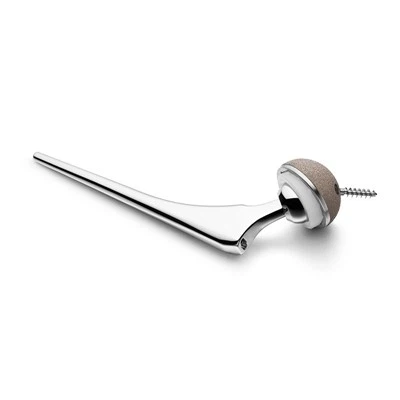
Hey there! As a supplier of Cemented Hip Replacement products, I've seen a lot of folks go through the journey of hip replacement surgery. One of the most common questions I get asked is, "How do I go up and down stairs after a cemented hip replacement?" Well, I'm here to share some tips and insights based on what I've learned from patients and medical professionals.
First off, let's talk a bit about cemented hip replacement. If you're not familiar with it, you can check out Cemented Hip Replacement for more details. In a cemented hip replacement, the artificial hip joint is fixed to the bone using a special cement. This provides immediate stability, which is great for getting back on your feet quickly, but it also means you need to be careful during the recovery process.
Right after the surgery, you're probably not going to be doing any stair climbing. You'll be in the hospital for a few days, and the medical staff will be focusing on getting you mobile in a controlled environment. They'll help you with basic movements like sitting up, standing, and taking a few steps around the room. This is all part of the initial recovery phase, and it's crucial for building up your strength and confidence.
Once you're ready to go home, the real challenge of stairs might come into play. But don't worry, there are some simple rules to follow. The general principle is to "go up with the good, go down with the bad." What does that mean? Well, when you're going up the stairs, you lead with your non - operated leg. This takes the pressure off the new hip joint and allows you to use your stronger leg to lift your body up. You can hold onto the handrail for extra support. So, step up with your good leg first, then bring your operated leg up to meet it.
Going down the stairs is the opposite. You start by lowering your operated leg first. This way, your good leg can control the movement and prevent any sudden jolts to the new hip. Again, use the handrail to steady yourself. Lower your operated leg down one step, then follow with your good leg. It might seem a bit awkward at first, but with practice, it'll become more natural.
It's also important to take your time. Don't rush. Stairs can be a bit tricky, especially in the early days of recovery. If you're feeling unsteady or tired, it's okay to take a break. You can sit on a step for a minute or two and catch your breath before continuing.
Another thing to consider is the environment. Make sure the stairs are well - lit and free of any obstacles. A loose rug or a stray object on the stairs can be a recipe for disaster. You might also want to install additional handrails if your stairs don't have them already. This extra support can make a big difference in your safety.
As you progress in your recovery, you'll start to gain more strength and mobility. You can gradually increase the number of stairs you climb and the frequency of your stair - climbing sessions. But it's still important to listen to your body. If you feel any pain or discomfort in your hip, stop what you're doing and rest.
Now, let's talk about some alternatives to traditional stair climbing. If you have a multi - level home and stairs are a real challenge, you might want to consider using a stair lift. A stair lift can be a great temporary solution during your recovery. It allows you to move between floors without putting any stress on your new hip.
There are also different types of hip replacement implants available in the market. If you're interested in learning about the latest options, you can check out Latest Cementless Hip Replacement Implant. Cementless hip replacement implants work differently. Instead of using cement, they rely on the bone to grow into the implant over time. This can have some advantages, but it also has its own recovery process. You can find more about cementless options at Cementless Hip Replacement Implant.


As a supplier of Cemented Hip Replacement products, I know that every patient's recovery is unique. Some people might recover faster than others, and some might face more challenges. That's why it's so important to have a good support system in place. Your family and friends can help you with daily tasks, and your physical therapist will be there to guide you through the recovery exercises.
Physical therapy is a key part of the whole process. Your therapist will design a personalized exercise program for you. This might include exercises to strengthen your hip muscles, improve your balance, and increase your range of motion. These exercises will not only help you with stair climbing but also with your overall quality of life after the surgery.
In conclusion, going up and down stairs after a cemented hip replacement is definitely doable, but it requires patience, caution, and a bit of practice. By following the "go up with the good, go down with the bad" rule, taking your time, and listening to your body, you'll be able to navigate stairs safely during your recovery.
If you're a medical professional or a facility looking for high - quality Cemented Hip Replacement products, I'd love to talk to you. We offer a wide range of products that are designed to meet the needs of patients and support a successful recovery. Whether you're interested in learning more about our products or starting a procurement process, don't hesitate to reach out.
References
- "Total Hip Replacement Recovery Guide" - General medical literature on hip replacement recovery
- Conversations with orthopedic surgeons and physical therapists in the field of hip replacement