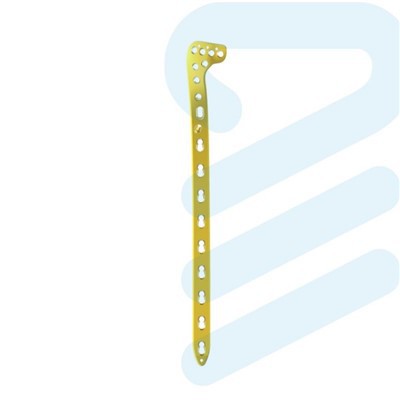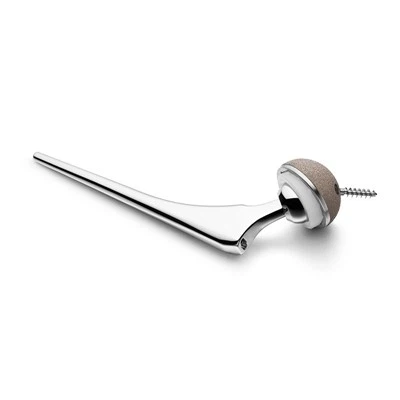
Hey there! As an intramedullary nail supplier, I've seen firsthand how these little wonders can work absolute magic when it comes to treating complex fractures. So, let's dive right in and chat about how intramedullary nails do their thing in those tricky fracture cases.
What Are Intramedullary Nails?
First off, what exactly are intramedullary nails? Well, they're basically long, thin rods that are inserted into the medullary canal of a bone. This canal is the hollow part in the middle of long bones like the femur, tibia, and humerus. The idea behind using intramedullary nails is to provide internal support to the broken bone, helping it heal properly.
There are different types of intramedullary nails out there. For example, there's the Elastic Intramedullary Nail. These are flexible and are often used in pediatric fractures or some less severe adult fractures. They can adapt to the shape of the bone and provide a certain amount of stability while allowing for some natural movement during the healing process.
Then we have the Intramedullary Interlocking Nail Tibia. This type is specifically designed for fractures in the tibia. It has locking screws at both ends that can be adjusted to hold the nail firmly in place within the bone, providing strong stability.
And don't forget the Intramedullary Nail for Intertrochanteric Hip Fracture. Hip fractures can be really complex, especially intertrochanteric ones. These nails are shaped and designed to fit the unique anatomy of the hip area and help align and stabilize the broken bones.


How Do They Work in Complex Fractures?
1. Stabilization
One of the main jobs of an intramedullary nail in a complex fracture is to stabilize the broken bone fragments. In a complex fracture, the bone might be broken into multiple pieces, or the break might be in a tricky location. When the nail is inserted into the medullary canal, it acts like a sort of internal splint. It holds the bone fragments in place, preventing them from moving around too much. This is super important because if the fragments keep shifting, it can be really hard for the bone to heal properly.
For example, in a comminuted fracture (where the bone is broken into three or more pieces), the intramedullary nail can bridge the gaps between the fragments and keep them in alignment. This allows the body's natural healing processes, like the formation of new bone tissue, to work more effectively.
2. Load - Bearing
Another key function is load - bearing. After a fracture, the bone needs to be able to handle some amount of weight and stress as the patient starts to move around again. Intramedullary nails are designed to take on some of this load. They transfer the forces that would normally be placed on the broken bone to the nail itself. This helps protect the healing bone from excessive stress and reduces the risk of the fracture re - occurring or the bone not healing correctly.
Let's say someone has a femoral fracture. The femur is a major weight - bearing bone in the body. An intramedullary nail inserted into the femur can help distribute the weight from the upper body down through the leg, allowing the patient to start bearing some weight on the leg earlier in the recovery process.
3. Alignment
Proper alignment of the broken bone fragments is crucial for a successful recovery. Intramedullary nails can help with this. During the insertion process, the surgeon can manipulate the nail to ensure that the bone fragments are lined up correctly. This is especially important in complex fractures where the normal anatomical alignment might be disrupted.
For instance, in a displaced fracture (where the bone fragments are out of their normal position), the nail can be used to gently guide the fragments back into place. Once the fragments are aligned, the nail holds them there until the bone heals.
The Surgical Process
Inserting an intramedullary nail is a surgical procedure. First, the patient is given anesthesia, either general or regional, depending on the type of fracture and the patient's overall health. The surgeon then makes a small incision near the end of the broken bone. They use special instruments to open up the medullary canal and insert the nail into it.
In some cases, the nail might need to be locked in place using screws. This is done to prevent the nail from rotating or sliding within the bone. The surgeon will carefully position the locking screws to ensure maximum stability.
After the nail is inserted and locked, the incision is closed, and the patient is taken to the recovery area. The whole process usually takes a few hours, depending on the complexity of the fracture.
Advantages in Complex Fractures
1. Minimally Invasive
Compared to some other methods of treating complex fractures, like open reduction and internal fixation with plates and screws, intramedullary nailing is relatively minimally invasive. The incisions are smaller, which means less damage to the surrounding soft tissues. This can lead to less pain, a shorter hospital stay, and a quicker recovery time for the patient.
2. Better Healing
Because the nail provides good stabilization, alignment, and load - bearing capabilities, it promotes better bone healing. The body can focus on building new bone tissue without having to deal with excessive movement or misalignment of the fragments. This often results in a stronger and more functional healed bone.
3. Early Mobilization
Patients with intramedullary nails can usually start moving around and bearing weight on the affected limb earlier than those treated with other methods. This is great for overall recovery as it helps prevent complications like muscle atrophy (weakening of the muscles) and joint stiffness.
Considerations and Potential Complications
Of course, like any medical procedure, there are some considerations and potential complications. One possible complication is infection. Since the nail is inserted into the body, there's a risk of bacteria getting into the surgical site and causing an infection. The surgeon will take precautions to prevent this, like using sterile techniques during the surgery and prescribing antibiotics if necessary.
Another issue could be nail breakage or loosening. Although intramedullary nails are made to be strong and durable, in some cases, they might break or the locking screws might loosen over time. This could require additional surgery to fix the problem.
There's also the possibility of nerve or blood vessel damage during the insertion of the nail. However, experienced surgeons are trained to minimize these risks.
Why Choose Our Intramedullary Nails?
As a supplier, we take pride in the quality of our intramedullary nails. Our nails are made from high - quality materials that are biocompatible, which means they're well - tolerated by the body. They're designed with the latest technology to provide the best possible stabilization, alignment, and load - bearing capabilities.
We also offer a wide range of nails to suit different types of complex fractures. Whether it's a pediatric fracture that needs an elastic nail or a hip fracture that requires a specialized nail, we've got you covered.
If you're a medical professional or a healthcare facility looking for reliable intramedullary nails for your patients, we'd love to have a chat with you. We can provide you with more information about our products, their features, and how they can benefit your patients. Let's work together to help your patients on their road to recovery. Reach out to us to start the procurement and negotiation process.
References
- Bucholz, R. W., Heckman, J. D., Court - Brown, C. M., & Tornetta, P. (Eds.). (2017). Rockwood and Green's Fractures in Adults. Lippincott Williams & Wilkins.
- Browner, B. D., Jupiter, J. B., Levine, A. M., & Trafton, P. G. (Eds.). (2019). Skeletal Trauma: Basic Science, Management, and Reconstruction. Elsevier.