

Bone remodeling is a fundamental biological process that maintains bone health and integrity throughout life. It involves the continuous resorption of old or damaged bone by osteoclasts and the subsequent formation of new bone by osteoblasts. This dynamic process is crucial for bone repair, adaptation to mechanical stress, and calcium homeostasis. In the context of orthopedic trauma, the use of implants such as the Calcaneus Plate can significantly influence bone remodeling. As a supplier of high - quality Calcaneus Plates, I am deeply interested in exploring how these plates impact the bone remodeling process.
Understanding the Calcaneus Plate
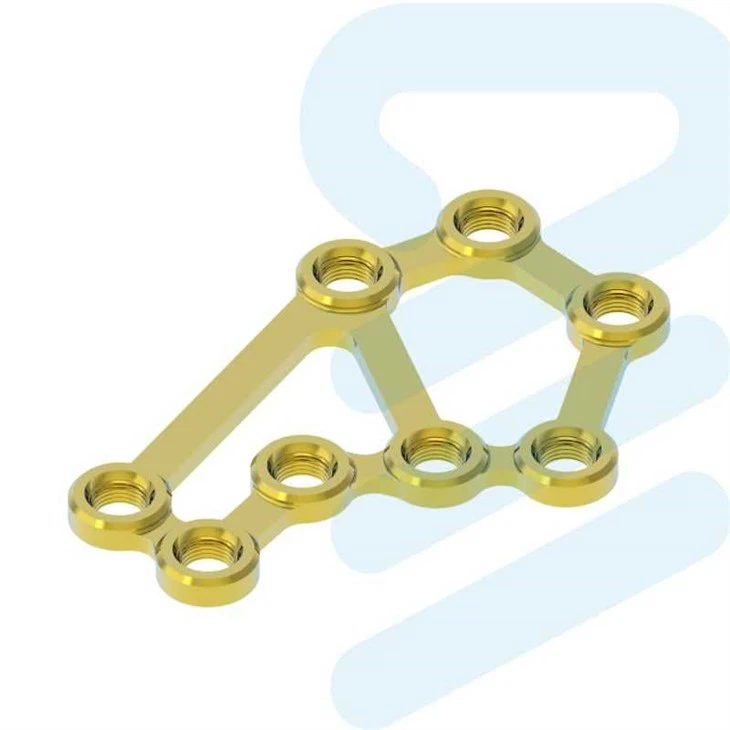
The Calcaneus Plate is a specialized orthopedic implant designed for the treatment of fractures in the calcaneus, the largest bone in the foot. It provides mechanical support to the fractured bone segments, helping to maintain proper alignment and stability during the healing process. The design of the Calcaneus Plate is optimized to fit the complex anatomy of the calcaneus, with features such as pre - contoured shapes and multiple screw holes for secure fixation.
Compared to other types of orthopedic plates, such as the Dynamic Compression Plate, the Calcaneus Plate is tailored to the unique biomechanical demands of the calcaneus. The calcaneus is subjected to high loads during weight - bearing activities, and the plate must be able to withstand these forces while allowing for normal bone remodeling. Another related implant is the Clavicle Hook Reconstruction Plate, which is used for clavicle fractures and has a different design and application compared to the Calcaneus Plate.
Mechanical Influence on Bone Remodeling
One of the primary ways in which a Calcaneus Plate affects bone remodeling is through its mechanical properties. When a fracture occurs in the calcaneus, the normal mechanical environment of the bone is disrupted. The Calcaneus Plate restores some of this mechanical stability by providing a rigid or semi - rigid fixation of the fractured segments.
In the initial stages of fracture healing, the plate reduces the amount of micromotion at the fracture site. Micromotion is necessary for the initiation of the healing process, but excessive micromotion can lead to non - union or delayed union. By limiting micromotion, the plate allows for the formation of a stable fracture callus, which is an important step in bone repair.
However, the presence of the plate also changes the stress distribution within the bone. According to Wolff's law, bone adapts to the mechanical stresses placed upon it. When a Calcaneus Plate is implanted, it takes on a portion of the load that would normally be borne by the bone. This phenomenon, known as stress shielding, can lead to a decrease in bone density in the areas adjacent to the plate. Osteoblasts are less stimulated to form new bone in regions where the mechanical stress is reduced, and osteoclasts may continue to resorb bone at a normal or even increased rate.
Over time, if the stress shielding effect is significant, it can result in bone atrophy around the plate. This is a concern because it may weaken the bone and increase the risk of refracture after the plate is removed. To mitigate this effect, some modern Calcaneus Plates are designed to have a more flexible or porous structure, which allows for better load transfer to the bone and reduces stress shielding.
Biological Influence on Bone Remodeling
In addition to its mechanical effects, a Calcaneus Plate can also have biological influences on bone remodeling. The surface properties of the plate play a crucial role in this regard. The material of the plate, such as titanium or stainless steel, can interact with the surrounding bone tissue and cells.
Titanium is a commonly used material for orthopedic implants because it has excellent biocompatibility. It forms a thin oxide layer on its surface, which promotes the adhesion of bone cells, such as osteoblasts. When osteoblasts attach to the surface of the titanium plate, they can secrete extracellular matrix proteins and initiate the process of bone formation. This direct interaction between the plate and the bone cells can enhance the integration of the plate with the bone and promote bone remodeling at the interface.
Some Calcaneus Plates are also coated with bioactive substances, such as hydroxyapatite. Hydroxyapatite is a mineral component of bone, and coating the plate with it can further improve its biocompatibility and osteoconductivity. Osteoblasts can use the hydroxyapatite coating as a scaffold for bone growth, leading to better bone - plate integration and more efficient bone remodeling.
On the other hand, the presence of the plate can also trigger an immune response in the body. The immune system recognizes the plate as a foreign object, and immune cells such as macrophages are recruited to the site of implantation. In the early stages, this immune response is beneficial as it helps to remove any debris or bacteria from the surgical site. However, if the immune response is excessive or prolonged, it can have a negative impact on bone remodeling. Inflammatory cytokines released by immune cells can inhibit osteoblast activity and promote osteoclast - mediated bone resorption.
Clinical Implications
The effects of a Calcaneus Plate on bone remodeling have important clinical implications. Surgeons need to carefully consider the choice of plate and the surgical technique when treating calcaneus fractures. For example, in cases where the fracture is relatively stable, a less rigid plate may be preferred to minimize stress shielding and promote more normal bone remodeling.

Post - operative management is also crucial. Patients are usually advised to engage in a gradual rehabilitation program to restore normal weight - bearing and mechanical loading on the bone. Physical therapy can help to stimulate bone remodeling by increasing the mechanical stress on the calcaneus and promoting the activity of osteoblasts.
Regular follow - up imaging, such as X - rays or CT scans, is necessary to monitor the progress of bone remodeling and the condition of the plate. If signs of bone atrophy or other complications are detected, appropriate interventions may be required, such as adjusting the rehabilitation program or considering plate removal.
Our Role as a Calcaneus Plate Supplier
As a supplier of Calcaneus Plates, we are committed to providing high - quality products that have a minimal negative impact on bone remodeling. We work closely with orthopedic surgeons and researchers to develop and improve our plate designs. Our plates are made from high - grade materials and are manufactured using advanced techniques to ensure optimal mechanical and biological properties.
We understand the importance of balancing the need for mechanical stability with the promotion of normal bone remodeling. That's why we offer a range of Calcaneus Plates with different designs, including those with reduced stress shielding features and bioactive coatings.
If you are an orthopedic surgeon, a hospital, or a medical institution interested in our Calcaneus Plates, we invite you to reach out to us for more information. We are happy to provide product samples, technical support, and engage in in - depth discussions about how our plates can meet your specific needs. Our goal is to contribute to the successful treatment of calcaneus fractures and the overall well - being of patients.
References
- Frost, H. M. (1987). Bone "mass" and the "mechanostat": A proposal. Anat Rec, 219(1), 1 - 9.
- Perren, S. M. (2002). The concept of biological fixation using the limited contact - dynamic compression plate (LC - DCP). Injury, 33(Suppl 4), C3 - C9.
- Schmidmaier, G., & Perren, S. M. (2009). The influence of implant stiffness on bone remodelling and healing. Injury, 40(Suppl 3), S3 - S9.






