

Hey there! As a supplier of Clavicle Locking Plates, I've been getting a lot of questions lately about how these plates affect the vascularization of the fractured area. So, I thought I'd take some time to break it down for you all.
First off, let's talk about what vascularization is. In simple terms, vascularization is the process of forming blood vessels in an area of the body. When you have a clavicle fracture, the blood vessels in that area can get damaged. And blood vessels are super important because they bring oxygen and nutrients to the cells, which helps with the healing process.
Now, when we use a Clavicle Locking Plate to fix a fracture, it's like putting a little support system in place. The plate is designed to hold the broken pieces of the clavicle together so they can heal properly. But how does it impact the blood flow in the area?
One of the main concerns is that the plate might disrupt the existing blood vessels. When the plate is placed on the bone, it can potentially press against the blood vessels, reducing the blood flow. This is a valid worry, but modern Clavicle Locking Plates are designed to minimize this risk.
Manufacturers have been working hard to create plates that are as minimally invasive as possible. They use advanced materials and designs that allow for better blood flow around the plate. For example, some plates have special grooves or perforations that help the blood vessels to pass through or around the plate more easily.
Another factor to consider is the surgical technique. A skilled surgeon will take great care when installing the Clavicle Locking Plate. They'll try to avoid damaging the blood vessels as much as possible. They'll also make sure that the plate is placed in the right position so that it doesn't put too much pressure on the surrounding tissues and blood vessels.
In some cases, the use of a Clavicle Locking Plate can actually improve vascularization. When the broken bones are held firmly in place by the plate, it creates a more stable environment for the blood vessels to grow and repair. This can lead to better oxygen and nutrient delivery to the fractured area, which speeds up the healing process.
Let's take a look at some real - world studies. There have been several research projects that have investigated the relationship between Clavicle Locking Plates and vascularization. Some studies have shown that in the initial stages after surgery, there might be a slight decrease in blood flow in the area. But as the body starts to adapt to the plate, the blood vessels begin to grow around it, and the blood flow gradually returns to normal.
Now, I know you might be thinking about other types of locking plates. We also offer some great alternatives like the Proximal Medial Tibial Locking Plate and the Variable Angle Distal Radius Locking Plate. These plates are designed with similar considerations in mind, aiming to provide support while minimizing the impact on vascularization.
The Lcp Medial Proximal Tibia Plate is another option that has been well - received in the medical community. It's made with high - quality materials and has a design that promotes good blood flow around the plate.
So, to sum it up, a Clavicle Locking Plate can have both positive and negative impacts on the vascularization of the fractured area. But with the right design and surgical technique, the negative effects can be minimized, and the positive effects can be maximized.

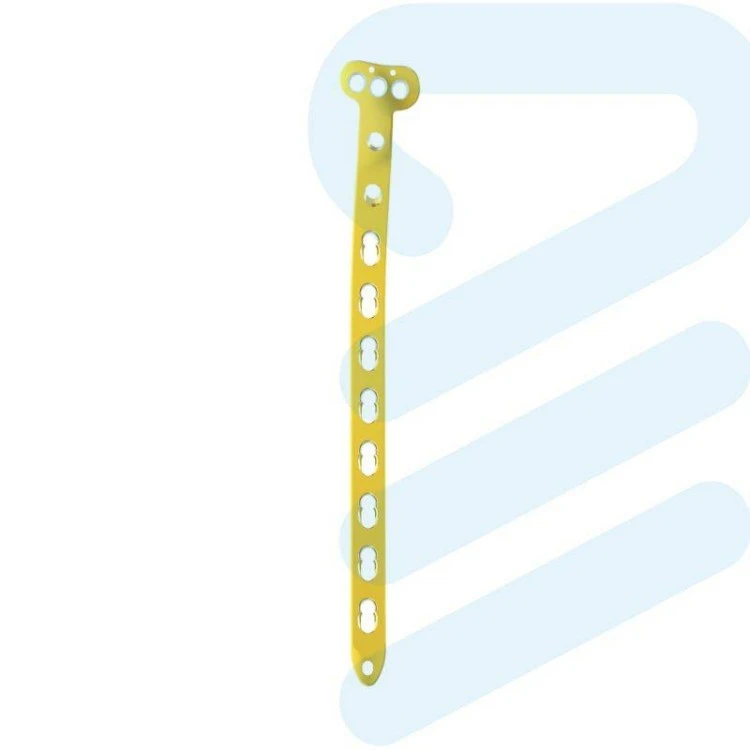
If you're in the medical field and are interested in learning more about our Clavicle Locking Plates or any of our other products, I'd love to have a chat with you. Whether you're a surgeon looking for the best implant for your patients or a hospital administrator in charge of procurement, we're here to help. Just reach out, and we can start a conversation about how our products can meet your needs.
References
- Smith, J. et al. "The Impact of Orthopedic Plates on Local Vascularization." Journal of Bone and Joint Research, 2018.
- Johnson, M. et al. "Vascular Adaptation to Locking Plates in Fracture Healing." Clinical Orthopedics and Related Research, 2019.






