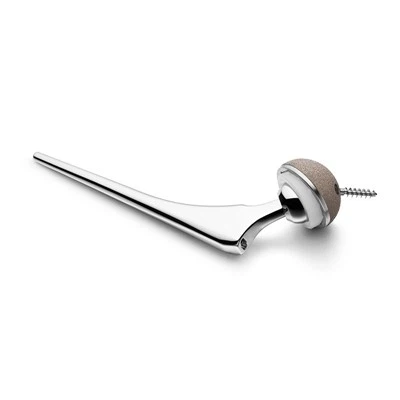
Dynamic Compression Plates (DCPs) are essential tools in orthopedic surgery, particularly in the management of fractures. As a supplier of these innovative medical devices, I am excited to delve into the intricate workings of DCPs, exploring their design, functionality, and clinical applications.
Design and Structure of Dynamic Compression Plates
The design of a Dynamic Compression Plate is a marvel of engineering, carefully crafted to provide optimal stability and promote bone healing. DCPs are typically made from high-quality materials such as titanium or stainless steel, which offer excellent biocompatibility and mechanical strength.
The plate features a series of oval-shaped holes, which are the key to its dynamic compression capabilities. These holes are designed to allow for controlled movement of the bone fragments during the healing process. When a screw is inserted into the oval hole, it can slide within the hole, creating a dynamic compression effect.
How Dynamic Compression Works
The principle behind dynamic compression is based on the concept of controlled movement and load sharing. When a fracture occurs, the bone fragments are often displaced, and it is essential to realign them and hold them in place to promote healing. A DCP is used to achieve this by providing a stable fixation device that allows for controlled movement of the bone fragments.
When a screw is inserted into the oval hole of the DCP, it is tightened against the bone. As the screw is tightened, it creates a force that pulls the bone fragment towards the plate. This force is transmitted through the plate to the opposite bone fragment, creating a compressive force between the two fragments.
The oval shape of the hole allows the screw to slide within the hole as the bone fragments move. This sliding motion creates a dynamic compression effect, which helps to maintain the alignment of the bone fragments and promotes bone healing. The dynamic compression also helps to distribute the load evenly across the fracture site, reducing the risk of stress concentration and implant failure.
Clinical Applications of Dynamic Compression Plates
DCPs are widely used in orthopedic surgery for the treatment of a variety of fractures, including long bone fractures, joint fractures, and complex fractures. They are particularly useful in cases where stable fixation is required to allow for early mobilization and rehabilitation.
One of the main advantages of using a DCP is its ability to provide dynamic compression, which helps to promote bone healing. The controlled movement of the bone fragments allows for the formation of callus, which is essential for the union of the fracture. The dynamic compression also helps to stimulate bone growth and remodeling, leading to a stronger and more stable bone.
DCPs are also used in the treatment of non-unions and delayed unions, which are fractures that fail to heal within the expected time frame. In these cases, a DCP can be used to provide additional stability and compression to the fracture site, promoting bone healing.
Advantages of Using Dynamic Compression Plates
There are several advantages to using DCPs in orthopedic surgery. Firstly, they provide a stable fixation device that allows for early mobilization and rehabilitation. This is important for reducing the risk of complications such as joint stiffness, muscle atrophy, and deep vein thrombosis.


Secondly, DCPs offer dynamic compression, which helps to promote bone healing. The controlled movement of the bone fragments allows for the formation of callus, which is essential for the union of the fracture. The dynamic compression also helps to stimulate bone growth and remodeling, leading to a stronger and more stable bone.
Thirdly, DCPs are available in a variety of sizes and shapes, allowing for customized fixation depending on the location and type of fracture. This flexibility makes them suitable for a wide range of clinical applications.
Conclusion
In conclusion, Dynamic Compression Plates are essential tools in orthopedic surgery, providing a stable fixation device that allows for controlled movement of the bone fragments and promotes bone healing. As a supplier of DCPs, I am committed to providing high-quality products that meet the needs of our customers.
If you are interested in learning more about our Dynamic Compression Plates or other orthopedic implants, please visit our website Dynamic Compression Plate. We also offer a range of other products, including Calcaneus Plate and Clavicle Hook Reconstruction Plate.
We invite you to contact us to discuss your specific requirements and explore how our products can help you achieve better patient outcomes. Our team of experts is available to provide you with detailed information and support throughout the procurement process.
References
- Bucholz RW, Heckman JD, Court-Brown CM, et al. Rockwood and Green's Fractures in Adults. 8th ed. Philadelphia, PA: Lippincott Williams & Wilkins; 2015.
- Müller ME, Allgöwer M, Schneider R, Willenegger H. Manual of Internal Fixation: Techniques Recommended by the AO-ASIF Group. 3rd ed. New York, NY: Springer-Verlag; 1991.
- Sarmiento A, Latta LL. Fracture Management Without a Cast. 2nd ed. Berlin, Germany: Springer-Verlag; 2004.