

The manufacturing process of medical devices, especially those as critical as Dynamic Compression Plates (DCPs), plays a pivotal role in determining their quality. As a supplier of Dynamic Compression Plates, I have witnessed firsthand how every step in the manufacturing journey can either enhance or compromise the final product's quality. In this blog, I will delve into the various aspects of the manufacturing process and how they impact the quality of DCPs.
Material Selection
The foundation of a high - quality Dynamic Compression Plate lies in the choice of materials. Medical - grade materials are essential to ensure biocompatibility, corrosion resistance, and mechanical strength. Commonly used materials for DCPs include titanium alloys and stainless steel. Titanium alloys are favored for their excellent biocompatibility, low density, and high strength - to - weight ratio. Stainless steel, on the other hand, offers good mechanical properties and is more cost - effective.
The quality of the raw materials is of utmost importance. Impurities in the material can lead to weakened mechanical properties, increased corrosion susceptibility, and potential adverse reactions in the human body. For example, if the titanium alloy contains excessive amounts of certain elements, it may cause allergic reactions in patients. As a supplier, we source our materials from trusted suppliers who adhere to strict quality control standards. We conduct thorough material testing, including chemical composition analysis and mechanical property testing, to ensure that the materials meet the required specifications.
Design and Engineering
The design of a Dynamic Compression Plate is a critical factor in its functionality and quality. A well - designed DCP should be able to provide stable fixation, promote bone healing, and minimize the risk of complications. Computer - aided design (CAD) and finite element analysis (FEA) are commonly used tools in the design process.
CAD allows engineers to create detailed 3D models of the DCP, taking into account factors such as plate shape, hole size and distribution, and surface finish. FEA, on the other hand, can simulate the mechanical behavior of the DCP under different loading conditions, helping to optimize the design for maximum strength and stability.
For instance, the shape of the DCP should be contoured to fit the anatomical structure of the bone. A poorly contoured plate may not sit properly on the bone surface, leading to uneven stress distribution and potential failure of the fixation. The hole design is also crucial. The holes in a DCP are designed to allow for the insertion of screws and to provide dynamic compression. If the holes are not properly sized or spaced, it can affect the screw - plate interface and the overall stability of the fixation.
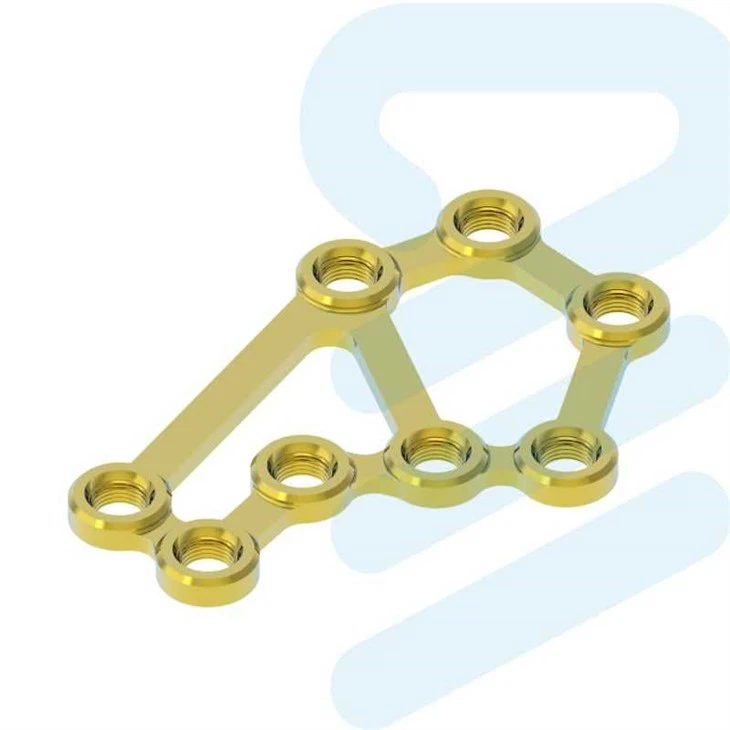

As a supplier, we work closely with experienced orthopedic surgeons and engineers to develop innovative designs that meet the needs of patients and surgeons. Our design team continuously conducts research and development to improve the performance of our DCPs. You can learn more about our product range, including Calcaneus Plate and Clavicle Hook Reconstruction Plate, on our website.
Manufacturing Techniques
The manufacturing techniques used to produce Dynamic Compression Plates have a significant impact on their quality. Precision machining is one of the most common manufacturing methods for DCPs. This process involves using computer - numerical - control (CNC) machines to cut, drill, and shape the raw materials into the desired form.
CNC machining offers high precision and repeatability, ensuring that each DCP meets the exact specifications of the design. However, the quality of the machining process depends on several factors, such as the cutting tools, machining parameters, and operator skill. Dull cutting tools can result in rough surfaces and inaccurate dimensions, while improper machining parameters can cause heat - affected zones, which can weaken the material.
Another important manufacturing technique is surface treatment. Surface treatment can improve the biocompatibility, corrosion resistance, and wear resistance of the DCP. Common surface treatment methods include passivation, anodizing, and coating. Passivation is a chemical process that removes free iron from the surface of the stainless - steel DCP, enhancing its corrosion resistance. Anodizing is often used for titanium alloy DCPs to create a protective oxide layer on the surface. Coating can be applied to the DCP to provide additional functionality, such as drug delivery or improved lubrication.
As a supplier, we invest in state - of - the - art manufacturing equipment and train our operators to ensure the highest quality of production. We also have a strict quality control system in place to monitor every step of the manufacturing process.
Quality Control and Testing
Quality control and testing are essential steps in ensuring the quality of Dynamic Compression Plates. Every DCP undergoes a series of tests before it is released to the market. These tests include dimensional inspection, mechanical property testing, surface finish inspection, and biocompatibility testing.
Dimensional inspection is used to verify that the DCP meets the specified dimensions. This is typically done using precision measuring instruments, such as coordinate measuring machines (CMMs). Mechanical property testing, such as tensile testing and bending testing, is used to evaluate the strength and ductility of the DCP. Surface finish inspection is important to ensure that the surface of the DCP is smooth and free of defects, which can affect its biocompatibility and performance.
Biocompatibility testing is perhaps the most critical test for a medical device like a DCP. Biocompatibility testing evaluates the interaction between the DCP and the human body. This includes tests for cytotoxicity, hemocompatibility, and tissue response. Only DCPs that pass all these tests are considered safe and suitable for use in patients.
As a supplier, we have a dedicated quality control team that is responsible for conducting these tests. We also comply with international standards and regulations, such as ISO 13485 and FDA requirements, to ensure the safety and effectiveness of our products. You can find more information about our Dynamic Compression Plate on our website.
Impact on Patient Outcomes
The quality of a Dynamic Compression Plate directly impacts patient outcomes. A high - quality DCP can provide stable fixation, promote bone healing, and reduce the risk of complications. On the other hand, a low - quality DCP may lead to implant failure, infection, and delayed bone healing.
For example, if a DCP has poor mechanical properties, it may break or loosen under normal loading conditions, requiring additional surgery to replace the implant. If the DCP is not biocompatible, it can cause an immune response in the patient, leading to inflammation and tissue damage.
As a supplier, our goal is to provide high - quality DCPs that can improve patient outcomes. We understand the importance of our role in the healthcare industry and are committed to delivering products that meet the highest standards of quality and safety.
Conclusion
In conclusion, the manufacturing process of Dynamic Compression Plates has a profound impact on their quality. From material selection to design, manufacturing techniques, quality control, and testing, every step in the process is crucial in ensuring that the final product is safe, effective, and of high quality.
As a supplier of Dynamic Compression Plates, we are dedicated to providing our customers with the best - quality products. We continuously strive to improve our manufacturing processes, invest in research and development, and adhere to strict quality control standards. If you are interested in our Dynamic Compression Plates or have any questions about our products, please feel free to contact us for further discussion and potential procurement opportunities.
References
- Ratner, B. D., Hoffman, A. S., Schoen, F. J., & Lemons, J. E. (Eds.). (2004). Biomaterials science: An introduction to materials in medicine. Elsevier.
- Black, J., & Hastings, G. (Eds.). (1998). Handbook of biomaterials properties. Chapman & Hall.
- ISO 13485:2016, Medical devices -- Quality management systems -- Requirements for regulatory purposes.






