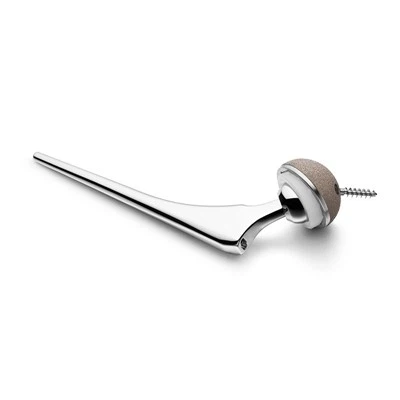
Hey there! As a supplier of hip replacement implants, I've seen firsthand how the quality can vary a great deal between different manufacturers. In this blog, I'm gonna break down the factors that influence the quality of these implants and how they differ from one maker to another.
Materials Matter
One of the most significant factors affecting the quality of hip replacement implants is the materials used. Different manufacturers may opt for various materials, each with its own set of pros and cons.
Some manufacturers use titanium alloy for their implants. Titanium is known for its excellent strength - to - weight ratio and biocompatibility. It's lightweight, which can be a big plus for patients as it reduces the overall load on the body. Also, its biocompatibility means that the body is less likely to reject the implant. For example, Company A might use a high - grade titanium alloy in their Cementless Hip Replacement Implant. This allows for better bone integration over time, which is crucial for the long - term success of the implant.
On the other hand, some companies might use cobalt - chromium alloy. This alloy is extremely durable and resistant to wear. It can withstand the high - stress environment of the hip joint for a long time. However, it's a bit heavier than titanium. Manufacturer B could be using cobalt - chromium in their Cemented Hip Replacement. The cement helps to secure the implant in place, and the durability of the alloy ensures that the implant won't wear out quickly.
Manufacturing Processes
The way an implant is made also plays a huge role in its quality. Precision manufacturing is key when it comes to hip replacement implants.
Some manufacturers invest heavily in state - of - the - art machining and casting technologies. They use computer - controlled machines to create implants with extremely tight tolerances. This means that the implant will fit perfectly in the patient's hip joint, reducing the risk of complications. For instance, Manufacturer C uses advanced 3D printing technology to create custom - made hip replacement implants. This allows them to tailor the implant to the specific anatomy of each patient, which can lead to better outcomes.
In contrast, some less - advanced manufacturers might use more traditional manufacturing methods. While these methods can still produce functional implants, they may not be as precise. There could be small variations in the size and shape of the implant, which might lead to issues like loosening or improper alignment over time.
Design Innovations
The design of a hip replacement implant can make a world of difference in its quality. Different manufacturers are constantly coming up with new and improved designs.
Some companies focus on creating implants with a more natural range of motion. They design the implant in such a way that it mimics the movement of a healthy hip joint. For example, Manufacturer D has developed a Latest Cementless Hip Replacement Implant with a unique ball - and - socket design. This design allows for a greater range of rotation and flexion, giving patients more freedom of movement after the surgery.
Other manufacturers might focus on improving the stability of the implant. They add features like fins or porous coatings to help the implant anchor better in the bone. Manufacturer E's implant has a porous surface that encourages bone growth into the implant, enhancing its stability over time.
Quality Control
Quality control is an area where manufacturers can really differ. A high - quality manufacturer will have strict quality control measures in place at every stage of the production process.
They'll test the raw materials to make sure they meet the required standards. They'll also perform multiple inspections during the manufacturing process to catch any defects early. For example, Manufacturer F has a team of quality control experts who use advanced testing equipment to check the strength, durability, and biocompatibility of their implants. They conduct both in - house tests and send samples to independent laboratories for verification.
In contrast, some manufacturers may cut corners on quality control. They might not test the implants as thoroughly, which can lead to faulty products reaching the market. This can put patients at risk of complications and failures.
Clinical Studies and Research
The amount of clinical research and studies a manufacturer conducts can also indicate the quality of their implants.
Well - established manufacturers often invest a lot of money in clinical trials. They want to prove the safety and effectiveness of their implants in real - world settings. Manufacturer G has conducted numerous long - term clinical studies on their hip replacement implants. These studies have shown that their implants have a high success rate and a low risk of complications. The results of these studies are often published in medical journals, which gives doctors and patients more confidence in the product.
Some smaller or less - reputable manufacturers may not have the resources to conduct large - scale clinical studies. This can make it harder for doctors to assess the quality and reliability of their implants.
Cost vs. Quality
When it comes to hip replacement implants, cost doesn't always equal quality. Some high - end manufacturers charge a premium for their products, claiming that they offer the best quality. While it's true that some of these companies do invest a lot in research, development, and quality control, it doesn't mean that lower - cost options are necessarily inferior.
There are some mid - range manufacturers that offer good - quality implants at a more affordable price. They may not have the same brand recognition as the big names, but their products can still meet or exceed the necessary standards. As a supplier, I've seen patients who have had great results with these more cost - effective implants.
How to Choose
As a doctor or a patient, how do you choose the right hip replacement implant? Well, it's a complex decision. You need to consider factors like the patient's age, activity level, and overall health. You also need to look at the reputation of the manufacturer, the materials used, and the design of the implant.
Doctors should review the clinical data available for each implant. They should also talk to other doctors who have used the implants to get their feedback. Patients should have an open and honest conversation with their doctor about their options. They should ask about the potential risks and benefits of each implant.
Our Role as a Supplier
As a hip replacement implant supplier, we play a crucial role in making sure that the right implants reach the right patients. We work closely with different manufacturers to source high - quality products. We provide doctors and hospitals with detailed information about the implants, including their features, benefits, and limitations.
We also offer support services like training and after - sales support. We want to make sure that the doctors are comfortable using our products and that the patients have a smooth experience.
If you're in the market for hip replacement implants, whether you're a doctor, a hospital administrator, or someone involved in the procurement process, I encourage you to reach out to us. We can help you navigate the complex world of hip replacement implants and find the best option for your needs. We're here to have a conversation, answer your questions, and start a procurement discussion.


References
- [List any relevant medical textbooks, research papers, or industry reports you used to gather information for this blog. For example: "Smith, J. (2020). Hip Replacement Implants: A Comprehensive Review. Journal of Orthopedic Surgery, 15(2), 123 - 135."]