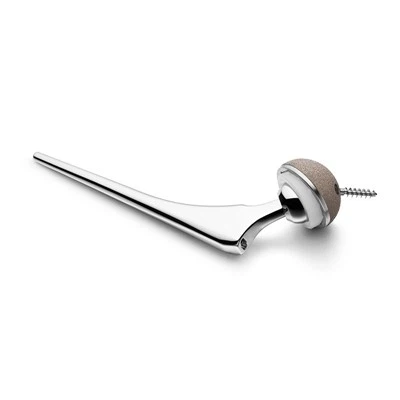
Hey there! As a supplier of Hip Replacement Implant, I've seen a lot of cases related to hip replacement implants over the years. One of the most common issues that patients and doctors deal with is a loose hip replacement implant. So, today I'm gonna talk about how a loose hip replacement implant is treated.
Understanding a Loose Hip Replacement Implant
First off, let's get a basic understanding of what a loose hip replacement implant is. When a hip replacement is done, the implant is supposed to stay firmly in place within the hip joint. But sometimes, due to various reasons like wear and tear, poor initial fixation, or an infection, the implant can become loose. This can lead to a whole bunch of problems for the patient, such as pain, limited mobility, and even instability in the hip.
There are two main types of hip replacement implants that I supply: Cemented Hip Replacement and Cementless Hip Replacement Implant. In a cemented hip replacement, the implant is fixed to the bone using a special bone cement. In a cementless hip replacement, the implant has a porous surface that allows the bone to grow into it, providing a natural fixation. Both types can become loose, but the treatment approaches might vary a bit.
Diagnosis of a Loose Implant
Before any treatment can begin, the doctor needs to figure out if the implant is actually loose. This usually involves a combination of physical exams, patient history, and imaging tests. The doctor will ask the patient about their symptoms, like pain, how it feels when they move the hip, and any changes in their ability to walk or do daily activities.
Imaging tests are super important in diagnosing a loose implant. X - rays are often the first step. They can show if there are any signs of the implant moving out of place or if there are gaps between the implant and the bone. CT scans and MRI scans can provide more detailed images, which are especially useful if the doctor suspects an infection or if the X - rays aren't clear enough.
Treatment Options
Non - Surgical Treatment
In some cases, non - surgical treatment might be tried first, especially if the implant is only slightly loose or if the patient isn't a good candidate for surgery. This can include things like pain management with medications. Over - the - counter pain relievers like acetaminophen or non - steroidal anti - inflammatory drugs (NSAIDs) can help reduce pain and inflammation.
Physical therapy is also an important part of non - surgical treatment. A physical therapist can teach the patient exercises to strengthen the muscles around the hip joint. Stronger muscles can help support the hip and reduce the stress on the loose implant. They can also work on improving the patient's range of motion and gait.


However, non - surgical treatment is usually just a temporary measure. It can't fix the underlying problem of a loose implant, and in most cases, surgery will eventually be needed.
Surgical Treatment
When non - surgical treatment isn't enough, surgical intervention is the next step. There are a few different surgical options depending on the situation.
Revision Hip Replacement
This is the most common surgical treatment for a loose hip replacement implant. In a revision hip replacement, the surgeon removes the loose implant and replaces it with a new one. The process is more complex than the initial hip replacement because the surgeon has to deal with the scar tissue and any bone loss that might have occurred around the old implant.
If the original implant was a cemented one, the surgeon will have to remove the old cement carefully. This can be tricky because the cement can be firmly attached to the bone. For a cementless implant, the surgeon will need to remove the implant and clean the bone surface to prepare it for the new implant.
During the revision surgery, the surgeon will also try to address any other issues that might have contributed to the implant loosening, such as an infection or a problem with the alignment of the hip joint.
Bone Grafting
Sometimes, when there is significant bone loss around the loose implant, bone grafting might be necessary. Bone grafting involves taking bone from another part of the patient's body (autograft) or using donor bone (allograft) and placing it around the area where the new implant will be inserted. The bone graft helps to rebuild the bone and provides a better surface for the new implant to attach to.
Infection Management
If an infection is the cause of the implant loosening, the treatment is a bit more complicated. The surgeon will usually have to remove the infected implant and clean the joint thoroughly. The patient will then be put on a course of antibiotics for a few weeks to clear the infection. After the infection is gone, a new implant can be inserted in a second surgery.
Factors Affecting Treatment
There are several factors that can affect the choice of treatment for a loose hip replacement implant. The patient's age and overall health are important. Older patients or those with other health problems might not be able to tolerate a major surgery like a revision hip replacement. In these cases, non - surgical treatment or a less invasive surgical option might be considered.
The type of implant that was originally used also matters. As I mentioned earlier, the treatment for a loose cemented implant might be different from that of a cementless implant. The extent of the bone loss and the presence of an infection are also crucial factors in determining the best treatment approach.
Conclusion
Dealing with a loose hip replacement implant is a complex issue, but with the right diagnosis and treatment, most patients can get back to a more normal and pain - free life. As a supplier of Hip Replacement Implant, I'm always committed to providing high - quality implants that are designed to last.
If you're in the medical field and are looking for reliable hip replacement implants, whether it's Cemented Hip Replacement or Cementless Hip Replacement Implant, I'd love to have a chat with you. We can discuss your specific needs and how our products can meet them. Just reach out, and let's start the conversation about improving patient outcomes together.
References
- American Academy of Orthopaedic Surgeons. Hip Replacement Revision.
- Journal of Bone and Joint Surgery. Studies on Hip Implant Loosening and Treatment.