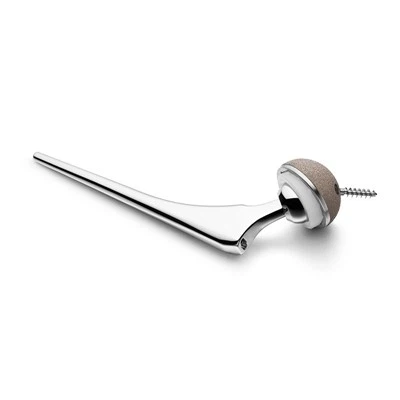
Hey there! As a supplier of Cemented Hip Replacement products, I've seen firsthand the importance of accurately diagnosing the loosening of these implants. It's a crucial aspect of patient care, and I'm here to share some insights on how this diagnosis is made.
First off, let's understand what a cemented hip replacement is. A Cemented Hip Replacement involves using bone cement to fix the artificial hip components to the bone. This method has been around for a while and has helped countless people regain mobility and reduce pain. But over time, there's a risk that the implant can loosen.
Clinical Symptoms
One of the first signs that something might be wrong is when the patient starts experiencing pain. It's not just any pain; it's usually a deep, aching pain in the hip or groin area. This pain can get worse with activity, like walking or standing for long periods. Sometimes, patients might also notice a clicking or grinding sensation in the hip joint.
Another symptom is a decrease in mobility. The patient might find it harder to move their hip as freely as before. They might have a limp or find it difficult to climb stairs. These symptoms can be pretty subtle at first, but as the loosening progresses, they become more noticeable.


Physical Examination
When a patient comes in with these symptoms, the doctor will start with a physical examination. They'll check the range of motion of the hip joint, looking for any limitations. They'll also apply pressure to different parts of the hip to see if it causes pain. The doctor might also check for any signs of instability in the joint, like excessive movement or a feeling of the joint "giving way."
Imaging Tests
Imaging tests play a huge role in diagnosing the loosening of a cemented hip replacement. X - rays are usually the first test done. A good set of X - rays can show if there are any signs of implant loosening, such as a widening of the space between the implant and the bone or a shift in the position of the implant.
However, X - rays aren't always enough. Sometimes, the signs of loosening are too subtle to be seen on an X - ray. That's when more advanced imaging tests come in.
CT scans are great for getting a more detailed view of the hip joint. They can show the bone and the implant in three dimensions, allowing the doctor to spot any small changes that might indicate loosening. MRI scans are also useful, especially for detecting soft - tissue problems around the implant. They can show if there's any inflammation or fluid collection, which can be a sign of a problem.
Blood Tests
Blood tests can also provide some clues. Elevated levels of certain markers in the blood can indicate an infection or inflammation around the implant. For example, a high level of C - reactive protein (CRP) or erythrocyte sedimentation rate (ESR) might suggest that there's an issue with the implant.
Comparison with Previous Exams
Doctors also rely on comparing the current findings with previous examinations. If a patient has had regular follow - up appointments after their hip replacement, the doctor can look at how the implant has changed over time. A small change in the X - ray or a gradual increase in pain and mobility problems can be strong indicators of loosening.
Differential Diagnosis
It's important to rule out other possible causes of the patient's symptoms. For example, the pain might be due to arthritis in the hip joint, rather than implant loosening. Or, there could be a problem with the surrounding muscles or tendons. The doctor will consider all these possibilities and use the combination of symptoms, physical examination, and imaging tests to make an accurate diagnosis.
Why Accurate Diagnosis Matters
Accurately diagnosing the loosening of a cemented hip replacement is crucial for several reasons. If the problem is caught early, it might be possible to treat it with less invasive methods, like physical therapy or medication. But if the loosening is left untreated, it can lead to more serious problems, such as bone loss around the implant and a complete failure of the hip replacement. This would then require a more complex and invasive revision surgery.
Our Role as a Supplier
As a supplier of Cemented Hip Replacement products, we understand the importance of high - quality implants. We work closely with medical professionals to ensure that our products are reliable and long - lasting. We also support the research and development of new technologies to improve the performance of these implants.
If you're in the market for a Cementless Hip Replacement Implant or the Latest Cementless Hip Replacement Implant, we've got you covered. Our products are designed with the latest advancements in mind, offering better stability and longevity.
If you're a medical professional or a distributor interested in our Cemented Hip Replacement products, we'd love to hear from you. We're always open to discussions about how we can meet your needs and provide the best solutions for your patients. Whether you have questions about our products, pricing, or delivery, don't hesitate to reach out. Let's work together to improve the lives of those in need of hip replacement solutions.
References
- Callaghan, J. J., & Rosenberg, A. G. (2007). Total Hip Arthroplasty. Lippincott Williams & Wilkins.
- Mont, M. A., & Hungerford, D. S. (2003). Hip Arthroplasty. Saunders.
- Malchau, H., Herberts, P., & Malchau, N. (2012). The Swedish Hip Arthroplasty Register. Springer.