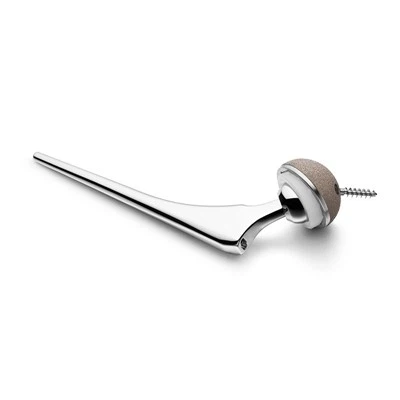
As a supplier of Straight Metacarpal Plates, I've witnessed firsthand the transformative impact these medical devices have on hand surgeries. In this blog, I'll delve into the advantages of Straight Metacarpal Plates over other fixation methods, highlighting why they are becoming the preferred choice for many orthopedic surgeons.
1. Superior Stability
One of the primary advantages of Straight Metacarpal Plates is their ability to provide superior stability. When a metacarpal bone is fractured, it requires a fixation method that can hold the fragments in place firmly during the healing process. Straight Metacarpal Plates are designed to be rigidly attached to the bone, minimizing movement between the fractured segments.
Compared to some traditional fixation methods like Kirschner wires (K-wires), which may offer less stability and are more prone to migration or loosening, Straight Metacarpal Plates offer a more reliable solution. K-wires are thin, flexible wires that are inserted through the bone to hold the fragments together. However, they can sometimes bend or shift, especially in cases of more complex fractures or when the patient engages in early mobilization. This can lead to malunion or nonunion of the fracture, which may require additional surgeries to correct.
In contrast, Straight Metacarpal Plates are made of high - quality materials such as titanium or stainless steel, which have excellent strength and durability. They are contoured to fit the shape of the metacarpal bone precisely, allowing for a secure fixation. This stability promotes faster and more predictable bone healing, reducing the risk of complications and improving the overall outcome for the patient.
2. Anatomical Adaptability
Straight Metacarpal Plates are designed with anatomical considerations in mind. The human hand is a complex structure with unique bone shapes and contours. A good fixation method should be able to adapt to these anatomical features to ensure proper alignment and function of the hand after surgery.
Our Straight Metacarpal Plates come in a variety of sizes and shapes to accommodate different metacarpal bones and fracture patterns. They can be easily contoured during the surgery to fit the specific needs of the patient. This anatomical adaptability is crucial for achieving optimal results. For example, in cases where the fracture is located near a joint, a well - contoured plate can help preserve joint function by ensuring that the bone fragments are aligned correctly.
In comparison, some other fixation methods may not offer the same level of anatomical adaptability. For instance, external fixators, which are devices that are attached to the outside of the body and connected to the bone with pins, can be bulky and may not allow for precise alignment of the bone fragments. They also limit the patient's mobility during the healing process and can increase the risk of infection at the pin insertion sites.
3. Early Mobilization
Another significant advantage of Straight Metacarpal Plates is that they allow for early mobilization of the hand. After a metacarpal fracture, early movement of the fingers and hand is essential for preventing stiffness, muscle atrophy, and joint contractures. With the stability provided by Straight Metacarpal Plates, patients can start gentle range - of - motion exercises soon after surgery.
This early mobilization not only improves the functional outcome of the hand but also enhances the patient's quality of life during the recovery period. In contrast, some fixation methods may require the hand to be immobilized for an extended period, which can lead to a loss of hand function. For example, casts or splints, which are commonly used for simple fractures, can restrict movement and may cause the muscles and tendons in the hand to weaken over time.
The ability to mobilize the hand early also reduces the risk of complications such as deep vein thrombosis (DVT) and pulmonary embolism (PE), which are more likely to occur in patients who are immobile for long periods. By promoting early mobilization, Straight Metacarpal Plates contribute to a faster and more complete recovery for the patient.
4. Low Profile Design
Straight Metacarpal Plates typically have a low - profile design. This means that they are thin and unobtrusive, reducing the likelihood of soft - tissue irritation and discomfort. The low - profile design also allows for better cosmetic results, as the plate is less visible under the skin.
In contrast, some other fixation methods may have a bulkier design that can cause problems. For example, some older - style plates or external fixators can protrude from the skin, leading to pressure on the surrounding soft tissues, pain, and an increased risk of skin breakdown. The low - profile design of Straight Metacarpal Plates minimizes these issues, making them more comfortable for the patient during the healing process.
5. Compatibility with Imaging
In modern orthopedic practice, imaging techniques such as X - rays, CT scans, and MRI are commonly used to monitor the healing process of fractures. Straight Metacarpal Plates are made of materials that are compatible with these imaging modalities. Titanium, in particular, is a non - ferromagnetic material, which means that it does not interfere with MRI scans.
This compatibility is important because it allows for accurate and detailed imaging of the bone and surrounding tissues without artifacts or distortion. In contrast, some other fixation materials, such as certain types of stainless steel, can cause significant artifacts on MRI scans, making it difficult for the surgeon to assess the healing progress accurately.
Comparison with Related Products
While discussing the advantages of Straight Metacarpal Plates, it's also worth comparing them with some related products in our catalog. For example, the T Shape Maxillofacial Plate is designed for use in maxillofacial surgeries. Although it shares some similarities with Straight Metacarpal Plates in terms of providing fixation, its design is optimized for the unique anatomical features of the face. It has a different shape and size to fit the maxilla and mandible bones, and its application is mainly focused on facial reconstruction and fracture repair.
The Titanium Finger Plate is another product in our range. As the name suggests, it is specifically designed for finger fractures. It is smaller and more delicate than the Straight Metacarpal Plate, as it needs to fit the small bones of the fingers. The Titanium Finger Plate is ideal for fractures in the phalanges, providing stability and promoting healing in the fingers.
The T Shape Metacarpal Plate is also a useful option for metacarpal fractures, especially those with more complex patterns. The T - shape design provides additional support and fixation points, which can be beneficial in cases where the fracture involves multiple fragments or is located at the base of the metacarpal bone. However, the Straight Metacarpal Plate remains a popular choice for simple to moderately complex metacarpal fractures due to its simplicity, stability, and cost - effectiveness.
Conclusion
In conclusion, Straight Metacarpal Plates offer numerous advantages over other fixation methods in the treatment of metacarpal fractures. Their superior stability, anatomical adaptability, ability to allow for early mobilization, low - profile design, and compatibility with imaging make them a reliable and effective choice for orthopedic surgeons.


If you are a medical professional or a hospital looking for high - quality Straight Metacarpal Plates or other trauma implants, I encourage you to contact us for further information and to discuss your specific needs. We are committed to providing the best products and services to meet the demands of the orthopedic community. Our team of experts is ready to assist you in making the right choice for your patients.
References
- Bucholz RW, Heckman JD, Court - Brown CM, et al. Rockwood and Green's Fractures in Adults. 7th ed. Philadelphia: Lippincott Williams & Wilkins; 2010.
- Jupiter JB, Ring D. Fractures of the Hand and Wrist. 6th ed. Philadelphia: Lippincott Williams & Wilkins; 2017.
- McQueen MM, Waddell JP. The management of fractures of the metacarpals and phalanges. J Bone Joint Surg Br. 1998;80(3):421 - 426.