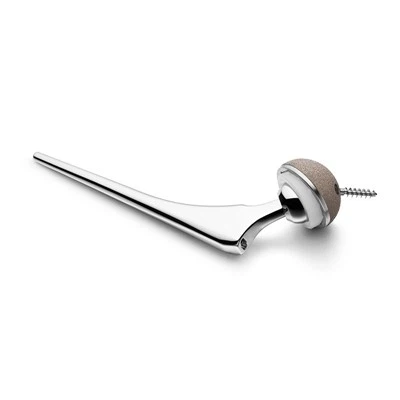
Hey there! As a supplier of Full Knee Replacement Sets, I've seen a lot in this industry. Today, I want to talk about the complications that can occur with a full knee replacement set.


First off, let's understand what a full knee replacement is. It's a surgical procedure where the damaged parts of the knee joint are removed and replaced with artificial components. Our Full Knee Replacement Set is designed to provide a high - quality solution for patients in need of this procedure.
1. Infection
One of the most serious complications is infection. It can happen right after the surgery or even months or years later. An infection in the knee joint can be extremely painful and may require additional surgeries to treat. There are two main types of infections: superficial and deep. Superficial infections affect the skin and tissues around the incision. They're usually easier to treat with antibiotics. However, deep infections, which reach the implant itself, are a whole different ballgame.
Deep infections often need a combination of long - term antibiotics and sometimes even the removal of the implant. This is a major setback for the patient as it means more pain, a longer recovery period, and additional costs. According to some studies, the risk of infection after a knee replacement is around 1 - 2%. As a supplier, we're constantly working with medical professionals to ensure that our products are as sterile as possible during the manufacturing process to minimize this risk.
2. Blood Clots
Blood clots are another common complication. After a knee replacement surgery, the patient's mobility is restricted for a while. This lack of movement can cause blood to pool in the veins of the legs, leading to the formation of clots. These clots can be dangerous because they can break loose and travel to other parts of the body, like the lungs. This is called a pulmonary embolism, which can be life - threatening.
Doctors usually prescribe blood - thinning medications to prevent blood clots. But even with these medications, there's still a risk. As a supplier, we're aware that the design of our Full Knee Replacement Set can also play a role. A well - designed set can help the surgeon perform the procedure more efficiently, reducing the time the patient is under anesthesia and on the operating table, which in turn can lower the risk of blood clots.
3. Implant Loosening
Over time, the implant may loosen from the bone. This can happen due to normal wear and tear, or because the bone doesn't grow properly around the implant. When the implant loosens, the patient may start to feel pain in the knee again. They may also notice a decrease in the range of motion of the knee.
Loosening can be a slow - developing problem. Sometimes, patients may not even realize there's an issue until the situation has gotten quite bad. In some cases, a revision surgery is needed to fix the loose implant. This involves removing the old implant and putting in a new one. It's a more complex and risky procedure than the initial knee replacement. As a supplier, we're always looking for ways to improve the materials and design of our Titanium Knee Replacement Set to ensure better bone - implant integration and reduce the risk of loosening.
4. Nerve Damage
Nerve damage can occur during the surgery. The knee joint is surrounded by a complex network of nerves. During the procedure, these nerves can be accidentally cut or damaged. Nerve damage can cause numbness, tingling, or even a loss of function in the affected area.
In most cases, minor nerve damage will heal on its own over time. But in some severe cases, the damage can be permanent. This can have a significant impact on the patient's quality of life. Surgeons need to be extremely careful during the operation to avoid nerve damage. And as a supplier, we're in constant communication with surgeons to understand how our products can be improved to make the surgical process safer for the nerves.
5. Stiffness and Limited Range of Motion
After a knee replacement, some patients may experience stiffness in the knee joint. This can limit their ability to bend and straighten the knee fully. Stiffness can be caused by a variety of factors, such as scar tissue formation, muscle weakness, or improper positioning of the implant.
Physical therapy is usually the first line of treatment for stiffness. Patients need to do regular exercises to improve the range of motion of their knee. But sometimes, despite all the efforts, the patient may still have some degree of limited mobility. As a supplier, we're looking into ways to design our Full Knee Replacement Set to allow for better alignment and movement of the implant, which could potentially reduce the risk of stiffness.
6. Allergic Reactions
Although rare, some patients may have an allergic reaction to the materials used in the knee replacement implant. For example, some people may be allergic to the metals in the implant, like nickel or cobalt. Allergic reactions can cause skin rashes, swelling, and pain around the knee joint.
Doctors usually do pre - operative tests to check for any potential allergies. But sometimes, these tests may not catch everything. If an allergic reaction occurs, the patient may need to have the implant removed and replaced with a different type of material. Our Titanium Knee Replacement Set is made of titanium, which is known for its low allergenic potential, but we still understand that there's always a small risk.
7. Instability
Knee instability is another complication that can occur. The knee may feel wobbly or give way during movement. This can be due to improper ligament balance during the surgery or the wear and tear of the soft tissues around the knee over time.
Instability can make it difficult for the patient to walk or perform normal activities. In some cases, additional surgery may be needed to correct the problem. As a supplier, we're working on improving the design of our products to help surgeons achieve better ligament balance during the procedure.
8. Fractures
Fractures around the implant can happen, especially in older patients or those with weak bones. These fractures can occur during the surgery itself or at a later stage. A fracture near the implant can be challenging to treat because the presence of the implant makes the repair more complicated.
Surgeons may need to use special techniques and additional hardware to fix the fracture. As a supplier, we're researching ways to make our implants more compatible with the surrounding bone to reduce the risk of fractures.
Conclusion
As you can see, there are several complications that can occur with a full knee replacement set. But it's important to note that knee replacement surgery is still a very successful procedure for most patients. It can significantly improve their quality of life by reducing pain and increasing mobility.
At our company, we're committed to providing high - quality Full Knee Replacement Sets that can help minimize these risks. We're constantly collaborating with medical professionals, researchers, and patients to understand their needs and improve our products.
If you're in the medical field and are interested in our products, we'd love to have a chat with you. Whether you're a surgeon, a hospital administrator, or a distributor, we're here to discuss how our Full Knee Replacement Set can meet your requirements. You can also check out our Hip Replacement Implant Surgical Instrument if you're interested in other joint - replacement products. Let's work together to improve the lives of patients through better surgical solutions.
References
- Berend, K. R., Lombardi, A. V., & Adams, A. J. (2012). Knee Arthroplasty. Elsevier Health Sciences.
- Insall, J. N., & Scott, W. N. (2012). Surgery of the Knee. Elsevier Health Sciences.
- Parvizi, J., & Hozack, W. J. (2010). Complications in Total Knee Arthroplasty. Lippincott Williams & Wilkins.