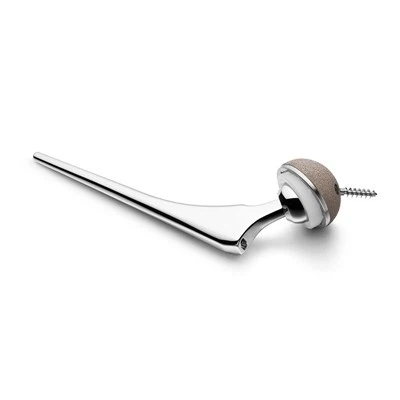
Hey there! I'm a supplier of Dynamic Compression Plates (DCPs). These plates are widely used in orthopedic surgeries for fracture fixation, and they've got some real benefits. But like any medical device, they're not without their drawbacks. In this blog, I'm gonna talk about the disadvantages of Dynamic Compression Plates.
1. Stress Shielding
One of the major issues with DCPs is stress shielding. When a DCP is used to fix a fracture, it takes on a significant amount of the load that the bone would normally bear. Over time, this can lead to a decrease in the stress on the bone. According to Wolff's law, bone remodels in response to the stress it experiences. So, when the stress on the bone is reduced, the bone starts to lose density and mass.
This reduction in bone density can make the bone weaker. Once the plate is removed, the bone may not be strong enough to handle normal loads, increasing the risk of refracture. For example, in a long - bone fracture fixed with a DCP, the bone around the plate may become osteopenic. This is a concern, especially in patients who are already at risk of osteoporosis or in cases where the bone needs to regain its full strength quickly.
2. Soft Tissue Irritation
DCPs are relatively large and rigid implants. They need to be placed under the soft tissues near the fracture site. This can cause irritation to the surrounding soft tissues, such as muscles, tendons, and skin. The sharp edges of the plate can rub against the soft tissues, leading to pain, inflammation, and even the formation of scar tissue.
In some cases, the irritation can be so severe that it affects the normal movement of the joint adjacent to the fracture site. For instance, if a DCP is used to fix a fracture near the knee joint, the plate may irritate the patellar tendon or the surrounding muscles, causing pain during knee flexion and extension. This can delay the patient's rehabilitation process and reduce their quality of life.
3. Infection Risk
Any surgical implant increases the risk of infection, and DCPs are no exception. The presence of a foreign body in the body provides a surface for bacteria to adhere to and form biofilms. These biofilms are difficult to treat with antibiotics and can lead to chronic infections.
The risk of infection is higher in cases where the surgery is complex, the wound is contaminated, or the patient has a weakened immune system. If an infection occurs, it can lead to serious complications, such as osteomyelitis (infection of the bone). Treating an infected DCP often requires the removal of the plate, which can disrupt the healing process of the fracture and may require additional surgeries.
4. Technical Demands
Using a DCP requires a high level of surgical skill. The plate needs to be accurately placed and fixed to the bone. Incorrect placement can lead to improper fracture reduction and alignment. For example, if the plate is not properly aligned with the axis of the bone, it can cause angular deformities during the healing process.
Moreover, the screws used to fix the DCP to the bone need to be inserted at the correct depth and angle. If the screws are too long, they can penetrate the opposite cortex of the bone and damage the surrounding tissues. If they are too short, the plate may not be securely fixed, leading to loosening and failure of the fixation.
5. Limited Adaptability
DCPs are designed for specific types of fractures and bone geometries. They may not be suitable for all fracture patterns. For example, in comminuted fractures (fractures with multiple bone fragments), it can be difficult to apply a DCP effectively. The plate may not be able to provide adequate stability to all the fragments, and the compression it provides may not be evenly distributed.
In addition, DCPs are relatively rigid, which means they may not adapt well to the natural movement and stress distribution of the bone. This can be a problem in areas of the body where the bones are subject to complex loading conditions, such as the joints.
6. Cost
DCPs can be relatively expensive. The cost includes not only the price of the plate itself but also the associated surgical instruments and the cost of the surgery. For patients without adequate insurance coverage, this can be a significant financial burden.
Moreover, if complications arise, such as infection or the need for plate removal and re - fixation, the cost can increase even further. This can limit the accessibility of DCPs in some healthcare settings, especially in developing countries or in patients with limited financial resources.


Conclusion
Despite these disadvantages, DCPs still play an important role in orthopedic surgery. They are effective in many cases of fracture fixation, especially when used appropriately. As a supplier, I understand the importance of being aware of these drawbacks so that surgeons can make informed decisions when choosing the right implant for their patients.
If you're in the medical field and are interested in learning more about Dynamic Compression Plates, or if you're considering purchasing them for your practice, I'd love to have a chat. We also offer other related products like the Clavicle Hook Reconstruction Plate and the Calcaneus Plate. You can find more information about our Dynamic Compression Plates on our website Dynamic Compression Plate. Don't hesitate to reach out for more details and to start a procurement discussion.
References
- Bonewald, L. F., & Johnson, M. L. (2008). The osteocyte: an endocrine cell... and more. Regulatory Peptides, 151(1 - 3), 30 - 38.
- Gustilo, R. B., & Anderson, J. T. (1976). Prevention of infection in the treatment of one thousand and twenty - five open fractures of long bones: retrospective and prospective analyses. The Journal of Bone & Joint Surgery, 58(4), 453 - 458.
- Perren, S. M. (2002). Evolution of the internal fixation of long bone fractures. The scientific basis of biological internal fixation: choosing a new balance between stability and biology. The Journal of Bone & Joint Surgery, 84 - A(1), 109 - 121.