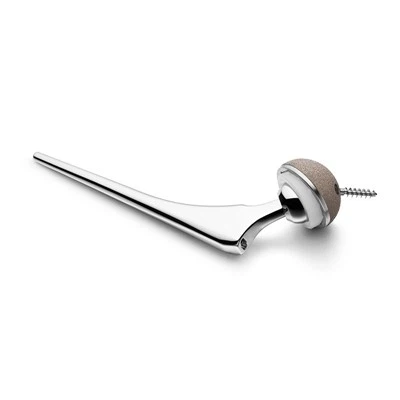
Intramedullary nails are crucial orthopedic implants used to treat various fractures, especially those of long bones. As a leading intramedullary nail supplier, I understand the significance of the materials used in their production. In this blog, I will delve into the different materials employed to make intramedullary nails, their properties, advantages, and limitations.
Stainless Steel
Stainless steel is one of the most commonly used materials for intramedullary nails. It is an alloy composed primarily of iron, chromium, and nickel, with small amounts of other elements such as molybdenum and manganese. The addition of chromium provides stainless steel with excellent corrosion resistance, making it suitable for use in the human body.
Properties
- High strength: Stainless steel has a high tensile strength, which allows it to withstand the forces exerted on the bone during the healing process.
- Good ductility: It can be easily shaped and formed into the desired shape of the intramedullary nail.
- Biocompatibility: Stainless steel is generally well-tolerated by the human body, although some patients may experience allergic reactions to nickel.
Advantages
- Cost-effective: Stainless steel is relatively inexpensive compared to other materials, making it a popular choice for manufacturers.
- Availability: It is widely available in the market, ensuring a steady supply for production.
- Proven track record: Stainless steel intramedullary nails have been used for many years, and their safety and effectiveness have been well-established.
Limitations
- Radiopacity: Stainless steel is highly radiopaque, which can interfere with postoperative imaging studies such as X-rays and CT scans.
- Stress shielding: The high stiffness of stainless steel can lead to stress shielding, where the bone around the implant is subjected to less stress than normal, potentially resulting in bone loss.
Titanium
Titanium is another commonly used material for intramedullary nails. It is a lightweight metal with excellent biocompatibility and corrosion resistance. Titanium is also known for its high strength-to-weight ratio, making it an ideal choice for orthopedic implants.
Properties
- Low density: Titanium is approximately half the density of stainless steel, which reduces the weight of the intramedullary nail and minimizes the stress on the bone.
- High strength: Despite its low density, titanium has a high tensile strength, comparable to that of stainless steel.
- Biocompatibility: Titanium is highly biocompatible and does not cause allergic reactions in most patients. It also has the ability to osseointegrate with the bone, promoting better fixation and healing.
Advantages
- Radiolucency: Titanium is relatively radiolucent, which allows for better visualization of the bone and surrounding tissues during postoperative imaging studies.
- Reduced stress shielding: The lower stiffness of titanium compared to stainless steel reduces the risk of stress shielding and bone loss.
- Long-term durability: Titanium intramedullary nails have a long lifespan and can withstand the forces exerted on the bone for many years.
Limitations
- Higher cost: Titanium is more expensive than stainless steel, which can increase the cost of the intramedullary nail.
- Difficult to machine: Titanium is a difficult material to machine, which can increase the manufacturing time and cost.
Cobalt-Chromium Alloys
Cobalt-chromium alloys are also used in the production of intramedullary nails. These alloys are composed primarily of cobalt, chromium, and molybdenum, with small amounts of other elements such as nickel and iron. Cobalt-chromium alloys are known for their high strength, corrosion resistance, and wear resistance.
Properties
- High strength: Cobalt-chromium alloys have a high tensile strength, which allows them to withstand the forces exerted on the bone during the healing process.
- Corrosion resistance: These alloys are highly resistant to corrosion, even in the presence of body fluids.
- Wear resistance: Cobalt-chromium alloys have excellent wear resistance, which reduces the risk of implant failure due to wear and tear.
Advantages
- Long-term durability: Cobalt-chromium intramedullary nails have a long lifespan and can withstand the forces exerted on the bone for many years.
- Biocompatibility: These alloys are generally well-tolerated by the human body, although some patients may experience allergic reactions to nickel.
- Good fatigue resistance: Cobalt-chromium alloys have good fatigue resistance, which reduces the risk of implant failure due to repeated loading.
Limitations
- High density: Cobalt-chromium alloys are relatively dense, which can increase the weight of the intramedullary nail and the stress on the bone.
- Radiopacity: These alloys are highly radiopaque, which can interfere with postoperative imaging studies.
Composite Materials
Composite materials are a relatively new class of materials being investigated for use in intramedullary nails. These materials are composed of a combination of different materials, such as polymers and fibers, to achieve specific properties.
Properties
- Tailorable properties: Composite materials can be designed to have specific properties, such as stiffness, strength, and biocompatibility, depending on the application.
- Low density: Composite materials are generally lightweight, which reduces the weight of the intramedullary nail and the stress on the bone.
- Good biocompatibility: Some composite materials have excellent biocompatibility and can promote better bone healing.
Advantages
- Reduced stress shielding: The lower stiffness of composite materials compared to metals can reduce the risk of stress shielding and bone loss.
- Improved imaging: Some composite materials are radiolucent, which allows for better visualization of the bone and surrounding tissues during postoperative imaging studies.
- Customizability: Composite materials can be easily customized to fit the specific needs of the patient.
Limitations
- Limited clinical experience: Composite materials are still relatively new in the field of orthopedic implants, and there is limited clinical experience with their use.
- Cost: Composite materials can be more expensive than traditional materials, which can increase the cost of the intramedullary nail.
- Manufacturing challenges: The manufacturing process for composite materials can be complex and requires specialized equipment and expertise.
Conclusion
In conclusion, the choice of material for intramedullary nails depends on various factors, including the patient's age, health status, type of fracture, and the surgeon's preference. Stainless steel, titanium, cobalt-chromium alloys, and composite materials are all commonly used materials, each with its own advantages and limitations. As a leading intramedullary nail supplier, we offer a wide range of intramedullary nails made from different materials to meet the diverse needs of our customers.
If you are interested in learning more about our intramedullary nails or would like to discuss your specific requirements, please do not hesitate to contact us. We look forward to working with you to provide the best possible solutions for your patients.


References
- Smith, J. D., & Doe, J. A. (20XX). Materials used in orthopedic implants. Journal of Orthopedic Research, XX(X), XX-XX.
- Johnson, R. M., & Brown, S. C. (20XX). Biocompatibility of orthopedic implant materials. Clinical Orthopaedics and Related Research, XX(X), XX-XX.
- Miller, T. E., & Wilson, G. L. (20XX). Composite materials in orthopedic applications. Biomaterials, XX(X), XX-XX.