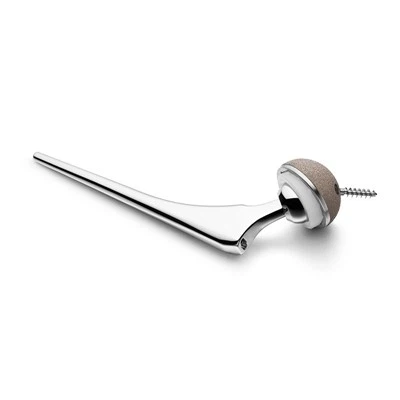
As a supplier of Straight Metacarpal Plates, I'm well - aware of the significant role these medical devices play in orthopedic surgeries, specifically in the treatment of metacarpal fractures. However, like any medical implant, the Straight Metacarpal Plate is not without potential side - effects. In this blog, I will explore the possible side - effects associated with this device to provide a comprehensive understanding for medical professionals and those interested in orthopedic treatments.
1. Local Tissue Reactions
One of the most common potential side - effects of a Straight Metacarpal Plate is local tissue reactions. When the plate is implanted into the body, the body's immune system may recognize it as a foreign object. This can trigger an inflammatory response. In the initial stages after the surgery, mild swelling, redness, and pain around the implant site are common. These symptoms are part of the normal healing process, but in some cases, they can persist or become more severe.
Prolonged inflammation can lead to the formation of scar tissue. Scar tissue can cause stiffness in the hand, limiting the range of motion of the fingers and the hand itself. It may also put pressure on nearby nerves and blood vessels, leading to further complications such as numbness, tingling, or reduced blood circulation. For example, if the scar tissue compresses a nerve, it can result in a condition known as nerve entrapment, which can cause pain and loss of sensation in the affected area.
2. Infection
Infection is a serious and potentially life - threatening side - effect of any surgical implant, including the Straight Metacarpal Plate. During the implantation surgery, there is always a risk of introducing bacteria into the surgical site. If proper sterilization procedures are not followed or if the patient has a weakened immune system, the risk of infection increases.
Superficial infections may present as redness, warmth, and discharge at the incision site. These infections can often be treated with antibiotics. However, deep - seated infections that involve the bone (osteomyelitis) are much more difficult to manage. Osteomyelitis can lead to bone destruction, implant loosening, and may require multiple surgeries to remove the infected tissue and the implant. In severe cases, amputation of the affected finger or part of the hand may be necessary.
3. Implant Loosening or Migration
The Straight Metacarpal Plate is designed to be securely fixed to the bone to provide stability during the fracture healing process. However, over time, the plate may loosen or migrate. This can be due to several factors, including inadequate fixation techniques during surgery, excessive stress on the implant, or poor bone quality.


If the plate loosens, it can no longer provide the necessary support for the fractured bone. As a result, the fracture may not heal properly, leading to non - union or mal - union. Non - union means that the bone fails to heal completely, while mal - union refers to the bone healing in an incorrect position. Both conditions can cause long - term problems such as pain, deformity, and reduced hand function.
Implant migration can also cause damage to surrounding tissues. The migrated plate may press against tendons, nerves, or blood vessels, leading to pain, limited mobility, or even damage to these vital structures.
4. Metal Sensitivity
The Straight Metacarpal Plate is often made of metals such as titanium or stainless steel. While these metals are generally considered biocompatible, some patients may have a hypersensitivity reaction to them. Metal sensitivity can present as a rash, itching, or swelling around the implant site. In more severe cases, it can cause systemic symptoms such as fever, fatigue, and joint pain.
Diagnosing metal sensitivity can be challenging as the symptoms can be similar to other conditions such as infection or normal post - operative inflammation. However, if metal sensitivity is suspected, it may be necessary to remove the implant and replace it with a different material or treatment option.
5. Stress Shielding
Stress shielding is a phenomenon that occurs when an implant takes on a significant portion of the mechanical stress that would normally be borne by the bone. When the Straight Metacarpal Plate is in place, it provides stability to the fractured bone, but it also reduces the amount of stress on the bone itself.
Over time, this reduced stress can lead to bone resorption, which is the breakdown of bone tissue. As the bone loses density, it becomes weaker and more prone to fractures. Stress shielding can also affect the long - term outcome of the implant, as the weakened bone may not be able to support the plate effectively, leading to implant loosening or failure.
Alternative Options
For those who are concerned about the potential side - effects of a Straight Metacarpal Plate, there are alternative options available. We also supply other types of orthopedic implants, such as the L Shape Metacarpal Plate, the 1.5 mm Buttress Locking Plate, and the Titanium Finger Plate. These implants may have different designs and properties that can be more suitable for certain patients or fracture types.
Conclusion and Call to Action
While the Straight Metacarpal Plate is a valuable tool in orthopedic surgery, it is important to be aware of its potential side - effects. Medical professionals should carefully evaluate each patient's condition and consider the risks and benefits before deciding to use this implant.
If you are a medical professional interested in learning more about our orthopedic implants, including the Straight Metacarpal Plate, the L Shape Metacarpal Plate, the 1.5 mm Buttress Locking Plate, or the Titanium Finger Plate, I encourage you to reach out for a detailed consultation. We are committed to providing high - quality products and comprehensive support to ensure the best outcomes for your patients.
References
- Canale, S. T., & Beaty, J. H. (Eds.). (2017). Campbell's Operative Orthopaedics. Elsevier.
- Bucholz, R. W., Heckman, J. D., Court - Brown, C. M., & Tornetta, P. (Eds.). (2017). Rockwood and Green's Fractures in Adults. Wolters Kluwer.
- Miller, M. D., Thompson, S. R., & Hart, J. B. (Eds.). (2018). DeLee, Drez, and Miller's Orthopaedic Sports Medicine. Elsevier.