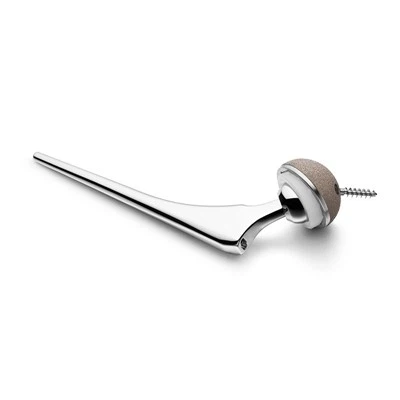
Hey there! If you're considering a hip replacement, you've probably come across the terms "cemented" and "uncemented" acetabular components. It can be a bit confusing, right? Well, I'm here to break it down for you. And by the way, I'm a supplier of Cemented Hip Replacement products, so I've got some firsthand knowledge on this topic.
Let's start with the basics. In a hip replacement, the acetabular component is the part that replaces the hip socket. The choice between a cemented and an uncemented acetabular component can have a big impact on the outcome of the surgery and your long - term comfort.
Cemented Acetabular Components
A cemented acetabular component is attached to the bone using a special bone cement. This cement acts like a glue, holding the component firmly in place right from the start. When we talk about Cemented Hip Replacement, it's all about that immediate stability.
One of the main advantages of a cemented acetabular component is that it allows for early weight - bearing. Since the component is securely fixed with cement, patients can usually start moving around and putting weight on the new hip sooner. This can be a huge plus, especially for older patients or those who are eager to get back to their normal activities as quickly as possible.
Cemented components also tend to be a good option for patients with poor bone quality. If the natural bone is weak or brittle, the cement can provide the extra support needed to keep the component in place. It fills in the gaps between the component and the bone, creating a solid connection.
However, there are some downsides to cemented acetabular components. Over time, the cement can break down. This can lead to loosening of the component and may require a revision surgery. Also, the process of inserting the cement can cause a sudden drop in blood pressure during surgery. Surgeons need to be extra careful and monitor the patient closely to prevent any complications.


Uncemented Acetabular Components
On the other hand, an uncemented acetabular component relies on the bone to grow into the surface of the component. This process is called osseointegration. When we look at Cementless Hip Replacement and Cementless Hip Replacement Implant, we're talking about a different approach.
The main advantage of an uncemented component is its long - term stability. Once the bone has grown into the component, it creates a very strong and natural - like bond. This can potentially reduce the need for revision surgeries in the long run.
Uncemented components are also a great choice for younger, more active patients. Since the bone has time to grow around the component, it can better withstand the stresses of an active lifestyle. And because there's no cement, there's no risk of cement - related complications like breakdown or blood pressure drops during surgery.
But uncemented acetabular components also have their drawbacks. The process of osseointegration takes time. Patients may need to use crutches or a walker for a longer period and have to limit their weight - bearing activities until the bone has properly grown into the component. Also, if the bone doesn't grow into the component as expected, it can lead to loosening and may require a revision surgery.
Comparing the Two
When it comes to choosing between a cemented and an uncemented acetabular component, there's no one - size - fits - all answer. It really depends on a variety of factors, such as the patient's age, activity level, and bone quality.
For older patients or those with poor bone quality, a cemented acetabular component might be the better option. The immediate stability it provides can help them get back on their feet quickly. But for younger, more active patients with good bone quality, an uncemented component could offer better long - term results.
Surgeons also play a crucial role in this decision. They'll take into account all the patient's medical history, lifestyle, and the overall condition of the hip joint. They'll use their expertise to recommend the most suitable option for each individual patient.
Why Choose Our Cemented Hip Replacement Products
As a supplier of Cemented Hip Replacement products, I can tell you that our products are top - notch. We use high - quality materials that are designed to provide long - lasting stability. Our components are carefully engineered to fit well and work seamlessly with the patient's body.
We understand the importance of early weight - bearing and getting patients back to their normal lives. That's why our cemented acetabular components are designed to offer immediate stability right after surgery. We also work closely with surgeons to ensure that our products meet the highest standards of safety and effectiveness.
If you're a healthcare provider or a medical institution looking for reliable Cemented Hip Replacement products, we'd love to have a chat with you. We can provide you with all the information you need about our products, including details on materials, design, and clinical studies.
Conclusion
In conclusion, the difference between a cemented and an uncemented acetabular component in a hip replacement is significant. Each option has its own set of advantages and disadvantages, and the choice depends on many factors. Whether it's the immediate stability of a cemented component or the long - term potential of an uncemented one, the goal is always to improve the patient's quality of life.
If you're interested in learning more about our Cemented Hip Replacement products or have any questions regarding the choice between cemented and uncemented components, don't hesitate to reach out. We're here to help you make the best decision for your patients.
References
- Murray DW. Cemented or uncemented total hip replacement? BMJ. 2000;321(7267):1183 - 1187.
- Callaghan JJ, Carls EN, Johnston RC, et al. Comparison of cemented and uncemented acetabular components in total hip arthroplasty. A randomized, prospective study. J Bone Joint Surg Am. 1996;78(1):69 - 82.