Rehabilitation plays a crucial role in the recovery process after any surgical procedure, and Calcaneus Plate surgery is no exception. As a supplier of high - quality Calcaneus Plate, I have witnessed firsthand the importance of proper rehabilitation for patients who have undergone this surgery. In this blog, we will explore the various aspects of rehabilitation needed after Calcaneus Plate surgery.
Initial Post - operative Phase
The initial post - operative phase begins immediately after the surgery and typically lasts for the first few days to weeks. During this time, the primary goals are to control pain, reduce swelling, and prevent infection.
Pain management is of utmost importance. The surgeon will usually prescribe pain medications to help the patient cope with the discomfort. These medications may include opioids in the early days, followed by non - steroidal anti - inflammatory drugs (NSAIDs) as the pain subsides. It is essential for the patient to take the medications as prescribed to ensure effective pain control.
Swelling is a common occurrence after surgery. Elevating the foot above the level of the heart can significantly reduce swelling. The patient should keep the foot propped up on pillows while sitting or lying down. Applying ice packs to the surgical area for short periods several times a day can also help reduce swelling and inflammation.
Infection prevention is another critical aspect. The surgical wound needs to be kept clean and dry. The patient will be instructed on how to change the dressing properly. Any signs of infection, such as increased pain, redness, swelling, or discharge from the wound, should be reported to the doctor immediately.
Immobilization and Weight - Bearing Restrictions
After Calcaneus Plate surgery, the foot is usually immobilized in a cast or a splint. This immobilization helps protect the surgical site and allows the bone to heal properly. The duration of immobilization can vary depending on the severity of the injury and the individual's healing process, but it typically ranges from 4 to 8 weeks.
During the immobilization period, weight - bearing on the affected foot is restricted. In most cases, the patient will be required to use crutches or a wheelchair to get around. Partial weight - bearing may be allowed after a certain period, as determined by the surgeon. This is usually done gradually, starting with a small amount of weight and increasing over time.
Physical Therapy
Once the immobilization period is over, physical therapy becomes a key part of the rehabilitation process. Physical therapy helps restore strength, flexibility, and range of motion in the foot and ankle.


The initial sessions of physical therapy may focus on gentle exercises to improve blood circulation and prevent muscle atrophy. These exercises may include ankle pumps, where the patient moves the ankle up and down, and toe curls. As the patient progresses, more advanced exercises are introduced.
Range - of - motion exercises are crucial for restoring normal movement in the ankle joint. The physical therapist may use manual techniques to gently stretch the ankle and improve its flexibility. The patient will also be taught exercises to perform at home, such as dorsiflexion (lifting the foot up) and plantarflexion (pointing the foot down).
Strengthening exercises are also an important part of physical therapy. These exercises target the muscles in the foot and ankle, which may have weakened during the immobilization period. Resistance bands can be used to add resistance to the exercises, gradually increasing the strength of the muscles. For example, the patient can use a resistance band to perform ankle eversion (turning the foot out) and inversion (turning the foot in) exercises.
Balance and proprioception training are also essential. Proprioception refers to the body's ability to sense its position in space. After Calcaneus Plate surgery, the patient's balance may be affected. The physical therapist will design exercises to improve balance, such as standing on one leg or walking on uneven surfaces.
Gait Training
Gait training is an important aspect of rehabilitation after Calcaneus Plate surgery. The goal of gait training is to help the patient walk normally again. The physical therapist will observe the patient's walking pattern and identify any abnormalities.
In the early stages of gait training, the patient may need to use assistive devices such as crutches or a cane. As the patient's strength and balance improve, the use of these devices can be gradually reduced. The physical therapist will teach the patient proper walking techniques, such as how to place the foot correctly on the ground, how to shift weight, and how to swing the leg forward.
Return to Normal Activities
The time it takes for a patient to return to normal activities after Calcaneus Plate surgery can vary widely. It depends on factors such as the severity of the injury, the patient's overall health, and how well they adhere to the rehabilitation program.
In general, most patients can return to light activities such as walking on flat surfaces within a few months after surgery. However, more strenuous activities such as running, jumping, or participating in sports may take longer. It is important for the patient to gradually increase the intensity of their activities to avoid re - injuring the foot.
Role of High - Quality Implants in Rehabilitation
As a supplier of Calcaneus Plate, I understand the importance of using high - quality implants in the surgical procedure. A well - designed and properly placed Calcaneus Plate can provide better stability to the fractured bone, which in turn can facilitate the rehabilitation process.
Our Calcaneus Plates are made from high - quality materials that are biocompatible with the human body. This reduces the risk of complications such as infection and implant rejection. The plates are also designed to fit the anatomy of the calcaneus bone precisely, ensuring optimal fixation.
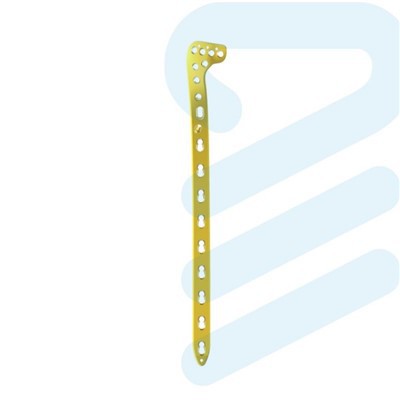
In addition to Calcaneus Plates, we also offer other high - quality trauma implants such as Clavicle Hook Reconstruction Plate and Dynamic Compression Plate. These implants are designed to meet the diverse needs of surgeons and patients in the field of orthopedic trauma.
Conclusion
Rehabilitation after Calcaneus Plate surgery is a complex and multi - faceted process. It requires a combination of pain management, immobilization, physical therapy, gait training, and a gradual return to normal activities. Using high - quality implants such as our Calcaneus Plates can also contribute to a successful rehabilitation outcome.
If you are a surgeon or a medical institution in need of high - quality trauma implants, including Calcaneus Plates, Clavicle Hook Reconstruction Plates, or Dynamic Compression Plates, we invite you to contact us for procurement and further discussion. We are committed to providing the best products and services to support your orthopedic trauma treatment needs.
References
- Bucholz RW, Heckman JD, Court - Brown CM, et al. Rockwood and Green's Fractures in Adults. 7th ed. Philadelphia: Lippincott Williams & Wilkins; 2010.
- Miller MD, Thompson SR. DeLee and Drez's Orthopaedic Sports Medicine: Principles and Practice. 4th ed. Philadelphia: Elsevier; 2015.
- Canale ST, Beaty JH. Campbell's Operative Orthopaedics. 12th ed. Philadelphia: Mosby; 2012.