

Building a trauma portfolio means deciding which fixation systems deserve a place in your catalog. The question behind most sourcing conversations is simple: intramedullary nail or locking plate? The answer depends on fracture pattern, anatomy and surgical technique, and it also decides what you ask your manufacturer to make.
|
24+
Years of experience
|
1500+
Square meters built
|
300+
Employees
|
100+
Cooperating partners
|
Nail vs Plate: What Each Implant Does Best
 |
Intramedullary Nail: Minimal Invasion, Early Loading
Fuxiang's titanium version is CNC machined in titanium alloy or stainless steel, φ7–φ9 mm × 180–300 mm. See the intramedullary nail OEM range. |
Locking Plate: Anatomic Fit, Stable Fixation
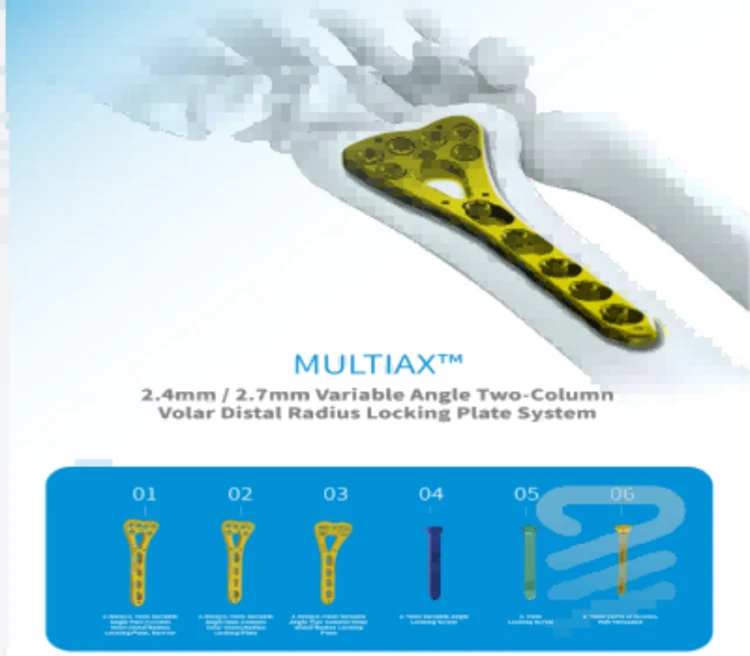
Fuxiang's variable angle distal radius plate comes in titanium or stainless steel, left and right, 57 mm with 5 holes. Browse the LCP plate OEM range. |
 |
Head-to-Head Comparison
| Factor | Intramedullary Nail | Locking Plate |
|---|---|---|
| Soft-tissue trauma | Minimal | More dissection |
| Ideal fracture | Midshaft or comminuted | Simple or proximal |
| Implant irritation | Possible at the shoulder | Possible at the deltoid or radial nerve site |
| Shoulder-problem risk | Higher (antegrade) | Lower |
| Materials at Fuxiang | Titanium alloy or SS | Titanium or SS |
The first four rows follow the humeral nail-versus-plate comparison published on Fuxiang's product page. Final implant choice always rests with the surgeon.
Three Questions That Decide Your Catalog
- Which fractures does your target market treat most? Long-bone shaft cases point to nails; periarticular cases point to plates.
- Which materials do your distributors expect? Titanium for biocompatibility and corrosion resistance, stainless steel where cost leads.
- Can one factory supply both? A single OEM partner means one audit, one quality system and one shipment.
Why OEM Brands Source Trauma Implants from Fuxiang
Founded in 2001, Fuxiang focuses on orthopedics and arthroplasty, with OEM/ODM services covering trauma implants, spine implants, hip and knee systems and related surgical instruments. Its products are exported to Asia, South America, the Middle East, North America and Europe through OEM/ODM cooperation and distributors. For a brand comparing suppliers, these points matter most:
|
Nails and plates together
Trauma, spine and joint implants plus surgical instruments from one manufacturer.
|
Low MOQ
Orders start from 50 sets, so new brands launch with low inventory pressure.
|
Fast prototyping
15-day rapid prototyping on titanium nails; plates show a 7–14 day lead time.
|
|
Global shipping
Door to door by DHL, TNT, UPS, FedEx or EMS up to 30 kg; air or sea above that.
|
1-on-1 engineering
Support from design optimization and sample testing through mass production.
|
Open to audits
Factory inspection and goods inspection are accepted at any time.
|
 |
Quality You Can VerifyProduction follows international medical device manufacturing standards such as ISO 13485, from raw material procurement and precision machining to surface treatment, final inspection and packaging. Review the compliance and certification page or request documents directly. |


