

Hey there, folks! As a supplier of Dynamic Compression Plates, I often get asked if there are any alternative devices out there. Well, let's dive right into this topic and explore what other options might be available.
First off, let's talk a bit about what a Dynamic Compression Plate (DCP) Dynamic Compression Plate is. A DCP is a widely used orthopedic implant that plays a crucial role in stabilizing bone fractures. It works by applying compression across the fracture site, which helps in promoting bone healing. The design of the DCP allows for both dynamic and static compression, giving surgeons flexibility in treating different types of fractures.
But like with any medical device, there are situations where alternative devices might be more suitable. One reason could be the nature of the fracture itself. Some fractures are more complex and might require a different approach. Another reason could be patient - specific factors, such as age, overall health, and bone quality.
One alternative device is the Calcaneus Plate Calcaneus Plate. The calcaneus is the heel bone, and fractures in this area can be quite tricky to treat. A Calcaneus Plate is specifically designed to fit the unique anatomy of the heel bone. It provides stable fixation and is often used in cases of calcaneal fractures. Unlike a DCP, which is more of a general - purpose plate for various long bone fractures, the Calcaneus Plate is highly specialized for the heel. It has a contoured shape that matches the curvature of the calcaneus, allowing for better anatomical reduction and fixation.
Another alternative is the Clavicle Hook Reconstruction Plate Clavicle Hook Reconstruction Plate. The clavicle, or collarbone, can easily get fractured, usually due to a fall or a direct blow. A Clavicle Hook Reconstruction Plate is designed to address the unique challenges of clavicle fractures. It has a hook - like structure at one end that can be inserted under the acromion (a part of the scapula), which helps in reducing the fracture and providing stability. This is quite different from a DCP, which may not be the best fit for the complex anatomy and forces acting on the clavicle.
Now, let's talk about the advantages and disadvantages of these alternatives compared to a DCP.
The Calcaneus Plate has the obvious advantage of being tailored to the heel bone. This means better fit and potentially fewer complications related to malalignment. However, because it's so specialized, it may not be as useful for fractures in other parts of the body. On the other hand, a DCP, being more general - purpose, can be used in a wider range of long - bone fractures.
The Clavicle Hook Reconstruction Plate is great for clavicle fractures as it provides excellent stability and allows for early shoulder movement. But it also has its drawbacks. The hook part of the plate can sometimes cause irritation to the surrounding soft tissues, leading to pain and inflammation. In contrast, a DCP has a more straightforward design and is less likely to cause such soft - tissue complications in general, but it may not be as effective for clavicle fractures.
In some cases, alternative fixation methods like intramedullary nails might be considered. Intramedullary nails are rods that are inserted into the medullary canal of the bone. They can provide strong fixation and are often used for fractures of long bones such as the femur and tibia. The main advantage of intramedullary nails is that they are less invasive compared to plating with a DCP. They cause less damage to the soft tissues around the fracture site and can lead to faster recovery times. However, they also require specialized equipment and skills to insert, and not all fractures are suitable for this type of treatment.
External fixators are yet another option. These are devices that are placed outside the body and are connected to the bone using pins or wires. External fixators are useful in cases where there is significant soft - tissue damage or open fractures. They allow for easy access to the wound for cleaning and monitoring. But they also have a high risk of infection, and patients may find them uncomfortable to wear for an extended period.
So, when it comes to choosing between a DCP and its alternatives, a lot depends on the specific situation. Surgeons need to consider factors such as the type and location of the fracture, the patient's overall condition, and the available resources.
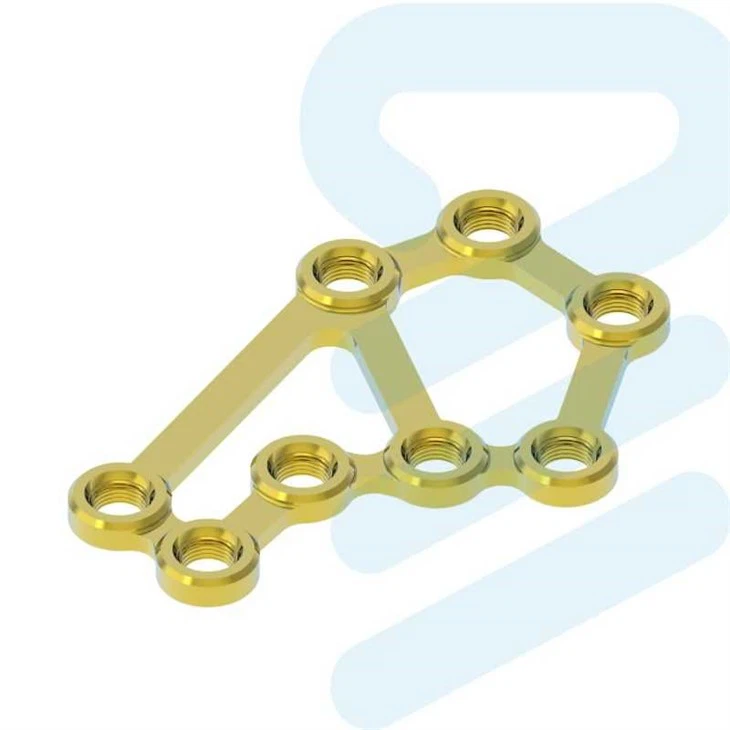

As a supplier of Dynamic Compression Plates, I understand that having a range of options is crucial for providing the best treatment possible. That's why we also offer high - quality Calcaneus Plates and Clavicle Hook Reconstruction Plates. We want to make sure that surgeons have access to the right device for each patient's needs.
If you're a medical professional or a hospital looking for reliable orthopedic implants, we'd love to have a chat with you. Whether you're interested in Dynamic Compression Plates, Calcaneus Plates, or Clavicle Hook Reconstruction Plates, we're here to help. Our team is knowledgeable and can provide you with all the information you need to make an informed decision. Don't hesitate to reach out and start a conversation about your procurement needs.
References
- Some general orthopedic textbooks on fracture management
- Research papers on the use of different orthopedic implants in treating fractures
