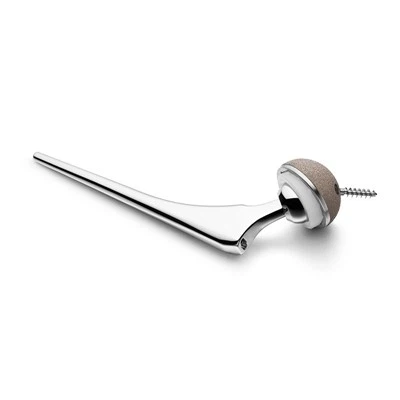
As a supplier of Full Knee Replacement Sets, I often encounter various inquiries from medical professionals and patients alike. One question that frequently arises is whether a full knee replacement set can be used in patients with autoimmune diseases. This is a complex and critical topic that requires a comprehensive understanding of both autoimmune diseases and the nature of knee replacement procedures.
Autoimmune diseases are a group of disorders in which the body's immune system mistakenly attacks its own tissues. Conditions such as rheumatoid arthritis (RA), systemic lupus erythematosus (SLE), and psoriatic arthritis fall into this category. These diseases can cause inflammation, pain, and joint damage, often leading to severe disability over time. In the case of the knee joint, the progressive destruction of cartilage and bone can significantly impair a patient's mobility and quality of life.
When considering knee replacement surgery for patients with autoimmune diseases, several factors need to be carefully evaluated. First and foremost is the impact of the autoimmune disease on the patient's overall health. Autoimmune diseases can affect multiple organ systems, including the heart, lungs, kidneys, and blood vessels. These comorbidities can increase the risk of surgical complications, such as infection, bleeding, and cardiovascular events. Therefore, a thorough pre - operative assessment by a multidisciplinary team, including rheumatologists, orthopedic surgeons, and anesthesiologists, is essential to determine the patient's suitability for surgery.


Another crucial factor is the activity of the autoimmune disease at the time of surgery. Active inflammation can interfere with the healing process and increase the risk of implant failure. For example, in patients with RA, high levels of inflammatory markers such as C - reactive protein (CRP) and erythrocyte sedimentation rate (ESR) may indicate ongoing joint inflammation. It is generally recommended to wait until the disease is in remission or at least well - controlled before proceeding with knee replacement surgery. This may involve adjusting the patient's immunosuppressive medications under the guidance of a rheumatologist.
The choice of the Full Knee Replacement Set also plays a significant role. A high - quality Full Knee Replacement Set is designed to provide long - term stability and functionality. The materials used in the implant, such as titanium, cobalt - chromium alloys, and ultra - high - molecular - weight polyethylene, need to be biocompatible to minimize the risk of an immune reaction. Additionally, the design of the implant should be appropriate for the patient's anatomy and the degree of joint damage. Our Full Knee Replacement Sets are carefully engineered to meet these requirements, ensuring optimal outcomes for patients, including those with autoimmune diseases.
In addition to the implant itself, the surgical technique and the use of appropriate instruments are crucial. The Total Knee Replacement Implant Instrument is used to precisely prepare the bone surfaces and insert the implant. A skilled surgeon, using advanced instruments, can minimize tissue damage and ensure accurate alignment of the implant. This is particularly important in patients with autoimmune diseases, as any misalignment can lead to increased stress on the implant and surrounding tissues, potentially causing early failure.
However, it's important to note that knee replacement surgery in patients with autoimmune diseases is not without risks. One of the major concerns is the increased susceptibility to infection. The use of immunosuppressive medications to control the autoimmune disease can weaken the body's immune system, making it more difficult to fight off bacteria and other pathogens. Post - operative infections can be devastating, often requiring additional surgeries, long - term antibiotic treatment, and in some cases, implant removal. Therefore, strict infection prevention measures, such as preoperative skin preparation, prophylactic antibiotics, and a clean surgical environment, are essential.
Despite the challenges, many patients with autoimmune diseases can benefit significantly from knee replacement surgery. Improved joint function and pain relief can enhance their quality of life and allow them to resume normal activities. For example, a patient with severe RA who has been limited in walking and performing daily tasks may experience a dramatic improvement after a successful knee replacement.
It's also worth mentioning that while we focus on Full Knee Replacement Sets, our product portfolio also includes Hip Replacement Implant Surgical Instrument for patients with hip joint problems. The principles of considering surgery for patients with autoimmune diseases are similar for hip replacement as well.
In conclusion, the use of a Full Knee Replacement Set in patients with autoimmune diseases is a complex decision that requires careful consideration of multiple factors. With proper pre - operative assessment, disease management, and the use of high - quality products and surgical techniques, many patients can achieve good outcomes. As a supplier of Full Knee Replacement Sets, we are committed to providing medical professionals with the best - in - class products and support to ensure the success of these challenging surgeries.
If you are a medical professional interested in our Full Knee Replacement Sets or other orthopedic instruments, we invite you to contact us for further information and to discuss your procurement needs. We are always ready to have in - depth discussions and provide customized solutions to meet your specific requirements.
References
- American Academy of Orthopaedic Surgeons. Total Knee Replacement. Available at the official website of AAOS.
- Firestein GS, Budd RC, Gabriel SE, et al. Kelley and Firestein's Textbook of Rheumatology. 10th ed. Elsevier; 2017.
- Mont MA, Hungerford DS, Zywiel MG. Total Knee Arthroplasty. 4th ed. Lippincott Williams & Wilkins; 2018.