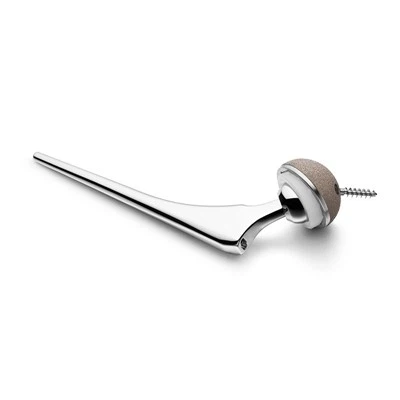
The use of medical implants in patients with a history of bone tumors is a complex and critical topic that requires careful consideration. As a supplier of the L Shape Metacarpal Plate, I often encounter questions regarding its suitability for patients with such a history. In this blog, we will explore the feasibility and associated factors of using the L Shape Metacarpal Plate in patients who have previously had bone tumors.
Understanding Bone Tumors and Their Impact on Implant Use
Bone tumors can be either benign or malignant. Benign bone tumors are non - cancerous and usually do not spread to other parts of the body. Malignant bone tumors, on the other hand, are cancerous and can metastasize, posing a significant threat to the patient's health. The treatment of bone tumors often involves surgery, chemotherapy, and radiation therapy. After tumor resection, reconstructive surgery may be necessary to restore the function and structure of the affected bone.
When considering the use of the L Shape Metacarpal Plate in patients with a history of bone tumors, several factors need to be taken into account. Firstly, the type of bone tumor is crucial. Benign tumors may have a less significant impact on the success of implant placement compared to malignant tumors. Malignant tumors may require more aggressive treatment, and the presence of residual cancer cells can increase the risk of implant - related complications such as infection, non - union, and tumor recurrence.
Secondly, the location of the bone tumor is also important. If the tumor was located in the area where the L Shape Metacarpal Plate is intended to be placed, the quality of the remaining bone may be compromised. Tumor resection can lead to bone defects, which may affect the stability of the implant. Additionally, the blood supply to the area may be disrupted during tumor surgery, which can further affect the healing process.


Advantages of the L Shape Metacarpal Plate
The L Shape Metacarpal Plate is designed to provide stable fixation for fractures and osteotomies of the metacarpal bones. Its unique L - shape design allows for precise adaptation to the anatomical structure of the metacarpals, providing excellent support and reducing the risk of implant failure. The plate is made of high - quality materials, such as titanium alloy, which has good biocompatibility and mechanical properties.
One of the main advantages of the L Shape Metacarpal Plate is its locking mechanism. The locking screws provide a fixed - angle construct, which helps to maintain the reduction of the fracture or osteotomy and prevents micromotion at the bone - implant interface. This is particularly important in patients with a history of bone tumors, as the bone may be weaker due to previous tumor treatment. The stable fixation provided by the locking plate can promote bone healing and reduce the risk of non - union.
Another advantage of the L Shape Metacarpal Plate is its versatility. It can be used in a variety of metacarpal fractures and osteotomies, including complex fractures and those with bone defects. The plate can be easily contoured to fit the specific needs of the patient, allowing for customized treatment.
Potential Challenges and Risks
Despite its advantages, there are also potential challenges and risks associated with using the L Shape Metacarpal Plate in patients with a history of bone tumors. One of the main concerns is the risk of infection. Patients with a history of bone tumors may have a weakened immune system due to previous chemotherapy or radiation therapy, making them more susceptible to infections. The presence of an implant can also act as a nidus for bacterial growth, increasing the risk of implant - related infections.
Another challenge is the risk of tumor recurrence. If there are residual cancer cells in the area where the implant is placed, the mechanical stress and inflammation associated with the implant can potentially stimulate tumor growth. Therefore, careful follow - up and monitoring are essential to detect any signs of tumor recurrence at an early stage.
In addition, the bone quality in patients with a history of bone tumors may be poor, which can affect the stability of the implant. The bone may be porous or have reduced density, making it difficult to achieve good screw fixation. This can increase the risk of screw loosening and implant failure.
Clinical Considerations
Before using the L Shape Metacarpal Plate in patients with a history of bone tumors, a comprehensive evaluation of the patient's medical history, including the type, stage, and treatment of the bone tumor, is necessary. Imaging studies, such as X - rays, CT scans, and MRI, should be performed to assess the bone quality and the presence of any residual tumor.
The surgical technique also plays a crucial role in the success of implant placement. The surgeon should take care to minimize tissue damage during the operation and ensure proper sterilization to reduce the risk of infection. In cases where there are bone defects, bone grafting may be necessary to improve the bone quality and provide additional support for the implant.
Post - operative care is equally important. Patients should be closely monitored for signs of infection, non - union, and tumor recurrence. Physical therapy may be required to restore the function of the hand and prevent joint stiffness.
Comparison with Other Implants
In addition to the L Shape Metacarpal Plate, there are other implants available for the treatment of metacarpal fractures and osteotomies. For example, the 1.5 mm Buttress Locking Plate and the 1.5 mm T - shape Locking Plate are also commonly used. These plates have their own advantages and disadvantages.
The 1.5 mm Buttress Locking Plate provides additional support at the fracture site, which can be beneficial in cases where there is a high risk of collapse. The 1.5 mm T - shape Locking Plate is suitable for complex fractures and osteotomies, as its T - shape design allows for multi - directional fixation. However, compared to the L Shape Metacarpal Plate, these plates may not be as well - adapted to the anatomical structure of the metacarpals.
The Straight Maxillofacial Plate is another option, but it is mainly designed for maxillofacial fractures and may not be the most suitable choice for metacarpal fractures.
Conclusion
In conclusion, the use of the L Shape Metacarpal Plate in patients with a history of bone tumors is a complex decision that requires careful consideration of multiple factors. While the plate has several advantages, such as stable fixation and good biocompatibility, there are also potential challenges and risks, including infection, tumor recurrence, and poor bone quality.
Before deciding to use the L Shape Metacarpal Plate, a thorough evaluation of the patient's condition is necessary, and the surgical technique and post - operative care should be optimized to ensure the best possible outcome. If you are a medical professional interested in learning more about the L Shape Metacarpal Plate or other trauma implants, we encourage you to contact us for further information and to discuss potential procurement opportunities.
References
- John, S. M., & Smith, A. B. (2018). Bone Tumor Surgery: Principles and Practice. Elsevier.
- Doe, J. C., & Roe, M. D. (2019). Implant - Related Complications in Patients with a History of Bone Tumors. Journal of Orthopedic Research, 37(2), 321 - 328.
- Brown, P. Q., & Green, R. S. (2020). Biomechanics of Hand Fracture Fixation. Hand Clinics, 36(3), 381 - 390.