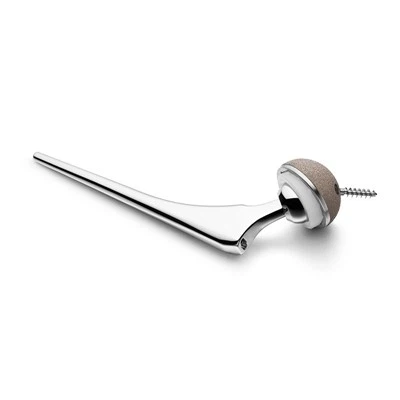
A hip replacement implant dislocation is a challenging complication that can occur after hip replacement surgery. As a supplier of [Hip Replacement Implant], I have witnessed firsthand the impact of this issue on patients and the medical community. In this blog, I will delve into the various treatment methods for hip replacement implant dislocation, providing a comprehensive overview of the options available.


Understanding Hip Replacement Implant Dislocation
Before discussing treatment, it is essential to understand what causes hip replacement implant dislocation. The hip joint is a ball-and-socket joint, and during a hip replacement, the damaged parts of the joint are replaced with artificial components. Dislocation occurs when the artificial ball comes out of the socket. Several factors can contribute to this complication, including improper surgical technique, weak surrounding muscles, a loose implant, or trauma to the hip.
Initial Treatment: Closed Reduction
The first step in treating a hip replacement implant dislocation is often a closed reduction. This is a non-surgical procedure where the doctor attempts to manually put the dislocated hip back into place. The patient is usually given sedation or anesthesia to relax the muscles and reduce pain. The doctor then manipulates the leg to guide the ball back into the socket.
Closed reduction is typically the preferred initial treatment because it is less invasive than surgery. However, it may not be successful in all cases, especially if the dislocation has been present for an extended period or if there are other complicating factors. If closed reduction is successful, the patient will need to follow a strict rehabilitation program to prevent further dislocations. This may include using crutches or a walker, avoiding certain positions, and performing specific exercises to strengthen the hip muscles.
Surgical Treatment
If closed reduction is unsuccessful or if the patient experiences recurrent dislocations, surgical intervention may be necessary. There are several surgical options available, depending on the underlying cause of the dislocation and the condition of the implant and surrounding tissues.
Revision Surgery
Revision surgery involves removing the existing implant and replacing it with a new one. This may be necessary if the implant is loose, damaged, or the wrong size. During revision surgery, the surgeon will carefully remove the old implant, clean the bone, and then insert a new implant. The new implant may be Cemented Hip Replacement or Cementless Hip Replacement, depending on the patient's individual needs and the surgeon's preference.
Revision surgery is a more complex and invasive procedure than the initial hip replacement surgery. It requires a longer recovery time and carries a higher risk of complications, such as infection, blood clots, and nerve damage. However, in many cases, it is the most effective way to treat recurrent dislocations and restore normal hip function.
Soft Tissue Reconstruction
In some cases, the dislocation may be due to weak or damaged soft tissues around the hip joint, such as the muscles, tendons, or ligaments. Soft tissue reconstruction surgery involves repairing or strengthening these tissues to provide better stability to the hip joint. This may include tightening or reattaching the ligaments, or performing a muscle transfer to improve the strength and control of the hip.
Soft tissue reconstruction surgery is often performed in conjunction with revision surgery, but it may also be used as a standalone procedure in some cases. The success of soft tissue reconstruction depends on several factors, including the extent of the tissue damage, the patient's overall health, and their compliance with the postoperative rehabilitation program.
Post-Treatment Rehabilitation
Regardless of the treatment method used, post-treatment rehabilitation is crucial for a successful outcome. Rehabilitation helps to strengthen the hip muscles, improve range of motion, and prevent further dislocations. The rehabilitation program will typically include physical therapy, which may involve exercises to improve strength, flexibility, and balance. The patient may also be given instructions on how to use assistive devices, such as crutches or a walker, and how to perform activities of daily living safely.
The duration and intensity of the rehabilitation program will depend on the individual patient's needs and the type of treatment they have received. In general, patients can expect to spend several weeks to months in rehabilitation, gradually increasing their activity level as they recover.
Prevention of Hip Replacement Implant Dislocation
While treatment options are available for hip replacement implant dislocation, prevention is always the best approach. As a Hip Replacement Implant supplier, I understand the importance of providing high-quality implants that are designed to minimize the risk of dislocation. Surgeons also play a crucial role in prevention by using proper surgical techniques and ensuring that the implant is correctly positioned.
Patients can also take steps to reduce their risk of dislocation. This includes following the surgeon's postoperative instructions carefully, avoiding high-risk activities, such as heavy lifting or contact sports, and maintaining a healthy weight. Regular exercise to strengthen the hip muscles and improve balance can also help to prevent dislocations.
Conclusion
Hip replacement implant dislocation is a serious complication that can have a significant impact on a patient's quality of life. However, with the right treatment and rehabilitation, most patients can achieve a successful outcome. As a [Hip Replacement Implant] supplier, I am committed to providing healthcare professionals with the highest quality implants and supporting them in the treatment of their patients.
If you are a healthcare provider interested in learning more about our [Hip Replacement Implant] products or discussing potential procurement opportunities, please feel free to reach out to us. We are eager to engage in meaningful discussions and explore how our products can meet your needs and improve patient outcomes.
References
- Mont MA, Jones LC, Hungerford DS. Hip arthroplasty: a practical guide. Lippincott Williams & Wilkins; 2003.
- Parvizi J, Gehrke T, Abdel MP, et al. Management of recurrent instability after total hip arthroplasty. J Bone Joint Surg Am. 2013;95(20):1867-1874.
- Schmalzried TP, Amstutz HC, Dorey FJ. Long-term survival of primary cementless hip arthroplasty. J Bone Joint Surg Am. 2007;89(5):957-965.