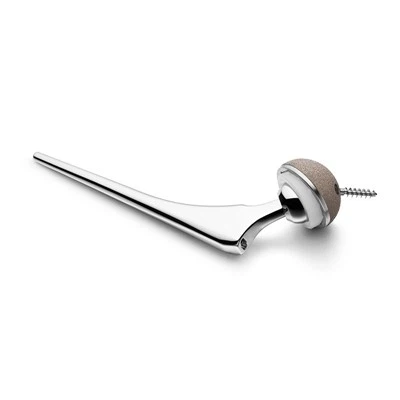
Hey there! As a supplier of Hip Replacement Implants, I've seen a lot of folks go through the journey of hip replacement surgery. One question that pops up all the time is, "How long should I use a walking aid after a hip replacement implant surgery?" Well, let's dig into this topic and find some answers.
First off, it's important to understand that every person's recovery is different. There are a bunch of factors that can affect how long you'll need to use a walking aid. Your age, overall health, the type of hip replacement you had, and how well you follow your rehab plan all play a role.


Let's talk about the types of hip replacements. There are two main ones: Cemented Hip Replacement and Cementless Hip Replacement. In a cemented hip replacement, the implant is fixed to the bone using bone cement. This provides immediate stability, so you might be able to ditch the walking aid a bit sooner. On the other hand, a cementless hip replacement relies on the bone growing into the implant for stability. This process takes time, so you may need to use the walking aid longer.
If you've got a Latest Cementless Hip Replacement Implant, things could be a bit different. These newer implants are designed to promote faster bone growth and better integration. That means you might be back on your feet without a walking aid in a shorter period compared to older cementless implants.
Now, let's get into the general timelines. Right after surgery, you'll definitely need a walking aid. Most people start with a walker or crutches. In the first few days to a week, you'll be using it all the time to get around safely. Your surgeon and physical therapist will guide you on how to use it properly.
For the first two to four weeks, you'll still be relying on the walking aid quite a bit. But as you start to gain strength and mobility, you might be able to use it less. You'll probably start to transition from a walker to crutches or a cane. This is a big step! It shows that your body is healing and getting stronger.
Around four to six weeks post - surgery, some people are able to stop using the walking aid completely. But this isn't the case for everyone. If you had a more complex surgery or if you're having a slower recovery, you might need to keep using it for a few more weeks.
Age is also a big factor. Younger, healthier people tend to recover faster. They have more muscle mass and better bone density, which helps with the healing process. Older folks might take a bit longer. Their bodies might not bounce back as quickly, and they may have other health issues that can slow down recovery.
Your overall health before surgery matters too. If you had pre - existing conditions like diabetes or heart disease, it can affect how long you need the walking aid. These conditions can impact your body's ability to heal and regain strength.
Another thing to consider is how well you stick to your rehab plan. Physical therapy is crucial after hip replacement surgery. Your therapist will give you exercises to do at home and in the clinic. These exercises help strengthen your muscles, improve your range of motion, and increase your balance. If you skip your therapy sessions or don't do your home exercises, you're likely to have a longer recovery and need the walking aid for a longer time.
Let's talk about the different types of walking aids and when you might use them. A walker is great in the early stages because it provides a lot of support. It has four legs and a wide base, which helps you stay stable. You can use it to move around your house, go to the bathroom, or take short walks outside.
Crutches are a bit more mobile than a walker. Once you start to gain some strength, you can switch to crutches. They allow you to move a bit faster and are more convenient for going up and down stairs.
A cane is the last step in the walking aid progression. It's used for balance and support when you're almost back to normal walking. You usually hold it on the opposite side of the operated hip.
So, how do you know when it's time to stop using the walking aid? Well, your surgeon and physical therapist will be the ones to tell you. They'll assess your strength, balance, and gait. If you can walk without pain, have good balance, and a normal walking pattern, then it might be time to say goodbye to the walking aid.
But even after you stop using the walking aid, you still need to be careful. Your hip is still healing, and you don't want to overdo it. You should avoid high - impact activities like running or jumping for at least a few months. Instead, focus on low - impact exercises like walking, swimming, and cycling.
As a Hip Replacement Implant supplier, I know how important it is to have the right implant for a successful recovery. Our implants are designed with the latest technology to ensure the best possible outcomes. Whether you need a cemented or cementless implant, we've got you covered.
If you're a healthcare provider looking for high - quality Hip Replacement Implants, or if you're a patient interested in learning more about our products, we'd love to hear from you. Contact us to start a conversation about your needs and how we can help you achieve a smooth recovery after hip replacement surgery.
References
- Smith, J. (2020). Hip Replacement Surgery: A Comprehensive Guide. Medical Press.
- Johnson, M. (2021). Recovery After Hip Replacement: Factors Affecting Healing Time. Journal of Orthopedic Research.
- Brown, R. (2022). The Role of Physical Therapy in Hip Replacement Recovery. Physical Therapy Today.