Hey there! I'm in the business of supplying intramedullary nails, and I've seen firsthand how these little wonders stack up against other fracture - fixation methods. So, let's dive right in and talk about the advantages of intramedullary nails.
First off, let's get a bit technical. An intramedullary nail is a device that's inserted into the medullary cavity of a long bone to stabilize a fracture. It's like a strong, internal scaffolding that holds the broken bone pieces in place so they can heal properly.
1. Biological Advantages
One of the major perks of using an intramedullary nail is its biological compatibility. When a bone breaks, the body's natural healing process kicks in. But some fixation methods can interfere with this process. For example, external fixators, which are placed outside the body and connected to the bone via pins, can disrupt the blood supply around the fracture site. This can slow down the healing process and increase the risk of infection.
On the other hand, intramedullary nails are inserted directly into the bone marrow. They don't cause as much damage to the surrounding soft tissues and blood vessels. This means that the blood supply to the fracture site remains relatively intact, which is crucial for bone healing. The bone gets the nutrients and oxygen it needs to repair itself more efficiently. It's like giving the bone a VIP pass to the healing party!
Another biological advantage is that intramedullary nails allow for early mobilization. When a patient has a fracture fixed with an intramedullary nail, they can usually start moving the affected limb sooner compared to other fixation methods. Early mobilization is great for overall patient recovery. It helps prevent muscle atrophy (when the muscles waste away), joint stiffness, and blood clots. And let's face it, patients are always happier when they can get back to their normal activities as soon as possible.
2. Mechanical Advantages
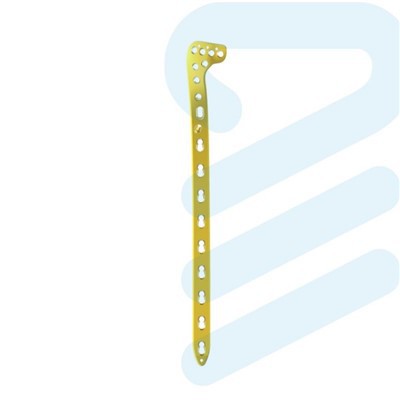
In terms of mechanical stability, intramedullary nails are top - notch. They provide a strong and rigid fixation for the fracture. Unlike plates and screws, which are attached to the outside of the bone, intramedullary nails are centered within the bone. This central placement helps distribute the load evenly across the fracture site.
Think of it like building a bridge. If you put the support beams on the outside of the bridge, it might not be as stable as if you had a central support column. The same goes for bones. Intramedullary nails act as that central support column, reducing the risk of the fracture shifting or angulating during the healing process.
Also, intramedullary nails can handle different types of forces better. They can resist bending, torsion (twisting), and axial loading (pressure along the length of the bone). This makes them suitable for a wide range of fractures, from simple to complex ones. For instance, in cases of long bone fractures like those in the femur or tibia, an intramedullary nail can provide the stability needed to withstand the forces generated during walking or other weight - bearing activities.
3. Versatility
Intramedullary nails come in all shapes and sizes, which makes them incredibly versatile. We offer a variety of options, such as the Elastic Intramedullary Nail. These elastic nails are great for pediatric fractures. They're flexible and can adapt to the growing bones of children. They provide a less invasive option compared to other fixation methods, which is important for kids who are still developing.
For more complex fractures in adults, we have the Titanium Femoral Reconstruction Interlocking Nail. This nail is designed specifically for femoral fractures, especially those that involve the reconstruction of the bone. It has interlocking features that allow for precise fixation and better control of the fracture fragments.
And then there's the Intramedullary Nail Intertrochanteric Fracture, which is tailored for fractures in the intertrochanteric region of the femur. This area is prone to fractures, especially in older adults. The specialized design of this nail helps to stabilize the fracture and promote faster healing.
4. Reduced Risk of Complications
Compared to other fracture fixation methods, intramedullary nails have a lower risk of certain complications. As I mentioned earlier, they cause less damage to the soft tissues and blood vessels, which reduces the risk of infection. External fixators, for example, have pins that go through the skin, creating an entry point for bacteria. This can lead to pin - site infections, which can be painful and difficult to treat.
Plates and screws also have their own set of potential complications. They can cause irritation to the surrounding soft tissues, and in some cases, the screws can loosen or break. This might require additional surgery to fix the problem. Intramedullary nails, being inside the bone, are less likely to cause these types of issues.
5. Cosmetic Benefits
Let's not forget about the cosmetic aspect. External fixators are, well, external. They're visible on the outside of the body, which can be a big concern for some patients, especially those who are self - conscious about their appearance. Plates and screws also require relatively large incisions for placement, which can leave noticeable scars.
Intramedullary nails, on the other hand, are inserted through small incisions. Once they're in place, they're hidden inside the bone. This means that there are fewer visible signs of the surgery, which can be a huge plus for patients. It allows them to feel more comfortable in their own skin during the recovery process.
Contact for Purchase
If you're in the market for high - quality intramedullary nails, whether you're a hospital, a medical distributor, or a healthcare provider, I'd love to talk to you. Our intramedullary nails are made with the latest technology and highest quality materials to ensure the best possible outcomes for patients. Don't hesitate to reach out for a purchase discussion. We can work together to find the right solution for your needs.


References
- Browner, B. D., Jupiter, J. B., Levine, A. M., & Trafton, P. G. (Eds.). (2019). Skeletal Trauma: Basic Science, Management, and Reconstruction. Elsevier.
- Bucholz, R. W., Heckman, J. D., Court - Brown, C. M., & Tornetta, P. (Eds.). (2017). Rockwood and Green's Fractures in Adults. Lippincott Williams & Wilkins.