

The L Shape Metacarpal Plate is a crucial orthopedic implant used in the treatment of metacarpal fractures. As a supplier of L Shape Metacarpal Plates, I have witnessed firsthand the importance of understanding the factors that affect its success rate. In this blog post, I will delve into these factors, drawing on both clinical experience and scientific research.
1. Design and Material of the Plate
The design of the L Shape Metacarpal Plate plays a vital role in its success. A well - designed plate should conform to the anatomical shape of the metacarpal bone. This ensures proper fit and stability, reducing the risk of displacement. For example, a plate with a pre - contoured shape that matches the curvature of the metacarpal can better distribute the load and provide more effective fixation.
The material of the plate is another critical factor. Titanium is a commonly used material for L Shape Metacarpal Plates due to its excellent biocompatibility, high strength - to - weight ratio, and corrosion resistance. Biocompatibility is essential as it reduces the risk of adverse tissue reactions, such as inflammation and infection. High strength ensures that the plate can withstand the mechanical forces exerted during the healing process, while corrosion resistance guarantees the long - term integrity of the implant.
2. Surgical Technique
The skill and experience of the surgeon performing the procedure have a significant impact on the success rate of the L Shape Metacarpal Plate. Proper surgical technique involves accurate reduction of the fracture fragments. If the fracture is not reduced correctly, it can lead to malunion, which may result in impaired hand function.
The placement of the plate is also crucial. The plate should be positioned in such a way that it provides optimal stability to the fracture site. This may require careful consideration of the orientation and location of the plate holes for screw insertion. Additionally, the surgeon must ensure that the screws are inserted at the correct depth and angle to secure the plate firmly to the bone.
Another aspect of surgical technique is the handling of soft tissues. Minimizing soft - tissue damage during surgery can promote better wound healing and reduce the risk of complications. For instance, excessive soft - tissue dissection can lead to poor blood supply to the fracture site, which may delay bone healing.
3. Patient - Related Factors
3.1 Age
Age is an important patient - related factor. In younger patients, the bone has a higher regenerative capacity, which generally leads to faster and more successful fracture healing. In contrast, older patients may have reduced bone density and a slower healing process. Osteoporosis, which is more common in the elderly, can also affect the stability of the plate - bone construct. The weakened bone may not provide sufficient support for the screws, increasing the risk of screw loosening and plate failure.
3.2 General Health
The overall health of the patient can influence the success rate of the L Shape Metacarpal Plate. Patients with underlying medical conditions, such as diabetes, may have impaired wound healing and a higher risk of infection. Diabetes can affect blood circulation and the body's immune response, making it more difficult to fight off infections at the surgical site.
Smoking is another factor that can have a negative impact on bone healing. Nicotine in cigarettes can constrict blood vessels, reducing blood flow to the fracture site. This can lead to delayed bone healing and an increased risk of non - union.

3.3 Compliance with Post - operative Care
Patient compliance with post - operative care instructions is essential for the success of the L Shape Metacarpal Plate. This includes following a proper rehabilitation program. Physical therapy is often prescribed to improve hand function, range of motion, and strength. Patients who do not adhere to the rehabilitation program may experience limited recovery and poor functional outcomes.
In addition, patients are usually advised to avoid activities that may put excessive stress on the injured hand during the healing period. Failure to follow these restrictions can lead to plate failure or delayed healing.
4. Fracture Characteristics
4.1 Fracture Type
The type of metacarpal fracture can affect the success rate of the L Shape Metacarpal Plate. Simple fractures, such as transverse or oblique fractures, are generally easier to treat and have a higher success rate compared to complex fractures, such as comminuted fractures. Comminuted fractures involve multiple bone fragments, which can make reduction and fixation more challenging. The presence of small bone fragments may also increase the risk of non - union.
4.2 Fracture Location
The location of the fracture on the metacarpal bone is also important. Fractures near the joint, such as intra - articular fractures, are more complex to treat as they require accurate restoration of the joint surface. Any irregularity in the joint surface can lead to post - traumatic arthritis, which can cause pain and reduced joint function.
5. Post - operative Complications
Infection is one of the most serious post - operative complications that can affect the success rate of the L Shape Metacarpal Plate. Surgical site infections can delay healing, cause pain, and may even require removal of the implant. The risk of infection can be reduced by strict adherence to sterile surgical techniques, appropriate use of prophylactic antibiotics, and proper wound care.
Another complication is hardware failure, which can occur due to factors such as screw loosening, plate breakage, or fatigue. Screw loosening can be caused by inadequate bone quality, improper screw insertion, or excessive mechanical stress. Plate breakage may result from high - energy trauma or long - term cyclic loading.
Non - union, or the failure of the bone to heal, is also a significant complication. It can be caused by factors such as poor blood supply, infection, or improper fracture fixation. Treatment of non - union may require additional surgical procedures, such as bone grafting.
Comparison with Other Implants
In the field of metacarpal fracture fixation, there are other implants available, such as the H Shape Metacarpal Plate, the 1.5 mm Condylar Locking Plate, and the 1.5 mm T - shape Locking Plate. Each implant has its own advantages and disadvantages.
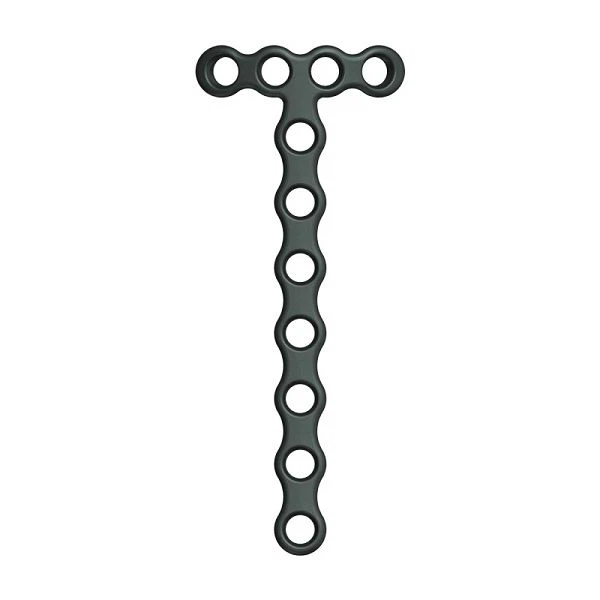
The H Shape Metacarpal Plate may provide more stability in certain fracture patterns due to its unique shape. The 1.5 mm Condylar Locking Plate is designed specifically for fractures near the condyles of the metacarpal bone, offering enhanced fixation in this critical area. The 1.5 mm T - shape Locking Plate can be useful for fractures that require a different type of support configuration.
However, the L Shape Metacarpal Plate remains a popular choice due to its versatility and ability to provide stable fixation for a wide range of metacarpal fractures.
Conclusion
The success rate of the L Shape Metacarpal Plate is influenced by a multitude of factors, including the design and material of the plate, surgical technique, patient - related factors, fracture characteristics, and post - operative complications. As a supplier, I understand the importance of providing high - quality L Shape Metacarpal Plates that meet the highest standards of design and material quality.
If you are interested in learning more about our L Shape Metacarpal Plates or are considering a purchase for your medical facility, we encourage you to reach out to us for further discussion and procurement negotiations. We are committed to providing the best products and support to help improve patient outcomes in metacarpal fracture treatment.
References
- Jupiter JB, Ring D. Fractures of the Hand and Wrist. Lippincott Williams & Wilkins; 2012.
- Browner BD, Jupiter JB, Levine AM, et al. Skeletal Trauma: Basic Science, Management, and Reconstruction. Elsevier; 2019.
- Miller MD, Thompson SR, eds. DeLee and Drez's Orthopaedic Sports Medicine: Principles and Practice. Elsevier; 2020.






